- Loading...
- Loading...



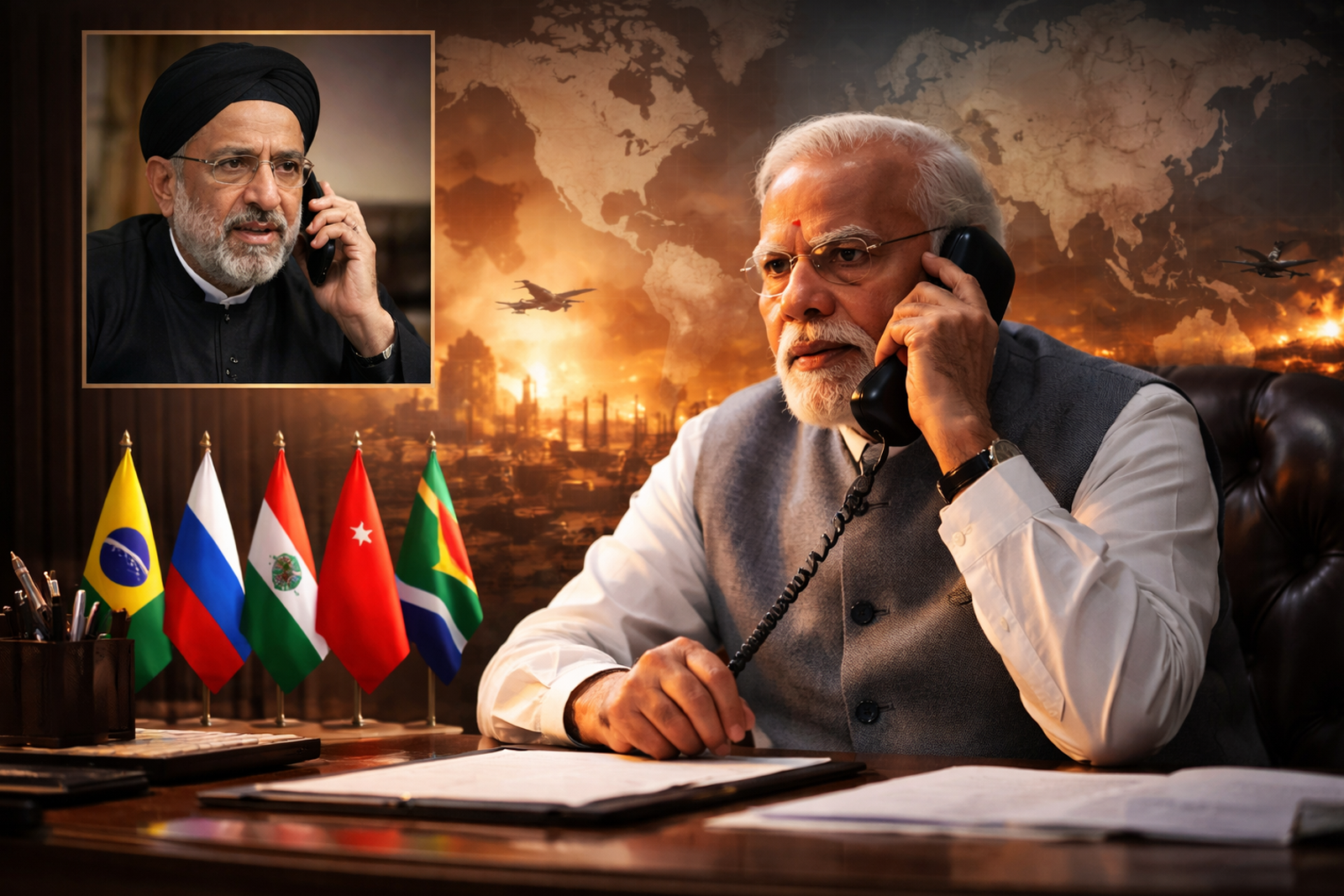
In a significant diplomatic development, Iran’s President held a high-level conversation with Narendra Modi, urging the BRICS bloc to step forward and play a more independent role in addressing the intensifying conflict with Israel. The call comes at a time when tensions between Iran and Israel continue to escalate, raising global concerns about regional stability and the potential for wider confrontation.
During the discussion, Iran emphasized the importance of collective diplomatic efforts through BRICS, which includes major emerging economies like India, Brazil, Russia, China, and South Africa. Tehran believes that BRICS, as a group representing a significant portion of the global population and economic power, can act independently of Western influence and help mediate a peaceful resolution.
Prime Minister Modi reportedly reiterated India’s long-standing position of promoting dialogue, restraint, and peaceful conflict resolution. India has maintained balanced diplomatic relations with both Iran and Israel, making its role particularly crucial in any multilateral effort aimed at de-escalation.
The appeal from Iran highlights a broader shift toward alternative global alliances as tensions rise in the Middle East. Analysts suggest that if BRICS chooses to engage more actively, it could reshape diplomatic dynamics and provide a new platform for conflict resolution outside traditional Western-led frameworks.
As the situation continues to unfold, the international community remains watchful, with hopes that diplomatic channels will prevail over military escalation.
As tensions intensify in the Middle East, a significant diplomatic exchange has drawn global attention. Iran’s President recently held a crucial conversation with Narendra Modi, urging the BRICS bloc to take on a more assertive and independent role in halting what Tehran describes as ongoing aggressions by Israel. The development underscores the growing urgency for diplomatic intervention as the situation between Iran and Israel edges closer to a broader regional crisis.
Iran’s outreach to India reflects a calculated diplomatic effort aimed at mobilizing non-Western global powers. During the call, Tehran emphasized that BRICS nations—comprising Brazil, Russia, India, China, and South Africa—possess both the political influence and economic strength to mediate effectively. By appealing directly to Prime Minister Modi, Iran is attempting to leverage India’s balanced foreign policy and its credibility as a nation that maintains strong ties with multiple global actors.
This move also highlights Iran’s desire to bypass traditional Western-led diplomatic channels, which it often views as biased. Instead, Tehran is placing its confidence in a multipolar world order where emerging economies play a more decisive role in global governance.
India finds itself in a uniquely sensitive position. With long-standing strategic and economic ties with both Iran and Israel, New Delhi must navigate carefully to maintain its neutrality. Prime Minister Modi reportedly reiterated India’s consistent stance: de-escalation, dialogue, and peaceful resolution.
India’s relationship with Israel spans defense, technology, and agriculture, while its ties with Iran are rooted in energy cooperation and regional connectivity projects. This dual engagement positions India as a potential mediator, but also limits how far it can lean toward either side.
The call for BRICS intervention is not accidental. Over the years, BRICS has evolved into a platform representing a significant portion of the global population and economic output. Iran’s appeal signals its belief that the bloc can:
Act Independently: Function outside the influence of Western alliances and institutions.
Promote Dialogue: Encourage diplomatic negotiations rather than military escalation.
Strengthen Multipolarity: Reinforce a global system where multiple power centers share responsibility.
Provide Economic Leverage: Use trade and economic partnerships as tools for de-escalation.
If BRICS responds collectively, it could mark a turning point in how international conflicts are addressed, shifting influence away from traditional Western powers.
The backdrop to this diplomatic push is a rapidly deteriorating security environment. Recent developments have seen increased military posturing, threats, and retaliatory rhetoric between Iran and Israel. The risk of miscalculation remains high, with concerns that any direct confrontation could draw in neighboring countries and disrupt global energy supplies.
The Middle East, already a region marked by geopolitical complexities, could face further instability if tensions are not contained. This has prompted calls from various global leaders for immediate restraint and renewed diplomatic engagement.
The international community is closely monitoring the situation. While Western nations continue to advocate for restraint, Iran’s call for BRICS involvement introduces a new dimension to the diplomatic landscape. It suggests a growing divide in how global crises are approached, with emerging powers seeking greater autonomy in decision-making.
Countries across Asia, Africa, and Latin America are particularly attentive, as many of them are part of or aligned with BRICS. Their response could determine whether the bloc steps into a more active geopolitical role or continues to function primarily as an economic coalition.
Despite its potential, BRICS faces several hurdles in taking a unified stance:
Diverse Interests: Member nations have differing geopolitical priorities and alliances.
Lack of Military Framework: BRICS is not a security alliance, limiting its ability to enforce decisions.
Consensus Requirement: Decisions often require agreement among all members, which can be difficult to achieve.
External Pressures: Global powers outside BRICS may resist its expanded role in conflict resolution.
These challenges mean that while the idea of BRICS intervention is compelling, its practical implementation remains uncertain.
As diplomatic efforts continue, the focus remains on preventing further escalation. Iran’s outreach to India and the broader BRICS bloc signals a shift toward alternative diplomatic mechanisms in addressing global conflicts. Whether this approach will yield tangible results depends on the willingness of BRICS nations to move beyond economic cooperation and take on a more active political role.
For now, the conversation between Tehran and New Delhi represents a critical moment in the evolving dynamics of international diplomacy. It highlights the growing importance of emerging powers in shaping global outcomes and the urgent need for collaborative efforts to maintain peace.
The call between Iran’s President and Narendra Modi is more than just a bilateral exchange—it reflects a broader push for a redefined global order. By urging BRICS to act independently, Iran is challenging traditional power structures and advocating for a more balanced approach to conflict resolution.
As tensions with Israel continue, the role of emerging alliances like BRICS could become increasingly significant. The coming days will reveal whether this diplomatic appeal translates into meaningful action or remains a symbolic gesture in a complex geopolitical landscape.

In today’s world of endless choices and digital noise, marketing is no longer just about promoting products — it’s about creating meaningful connections. Successful brands focus on building relationships rather than chasing transactions. Marketing that connects transforms audiences into loyal communities by earning their trust, understanding their needs, and delivering genuine value. When businesses prioritize people over promotions, marketing becomes more than strategy — it becomes a relationship built to last.

Odisha’s small businesses are entering a new era — where mobile apps, online payments, and e-commerce aren’t luxuries, but lifelines for growth and survival.

As India enters the second phase of its digital revolution, artificial intelligence and automation are not just transforming industries—they’re redefining what it means to work, earn, and adapt.

The conference brought together officials from ten central districts, including district collectors, tehsildars, registrars, and welfare officers, either virtually or in person.

We glorified sleepless nights, burnout, and exhaustion as signs of ambition. But when did working yourself to the edge become the definition of success?

Not everyone who thrives in tech writes code. Some design the very experiences that make technology human.


Leave Comments