- Loading...
- Loading...



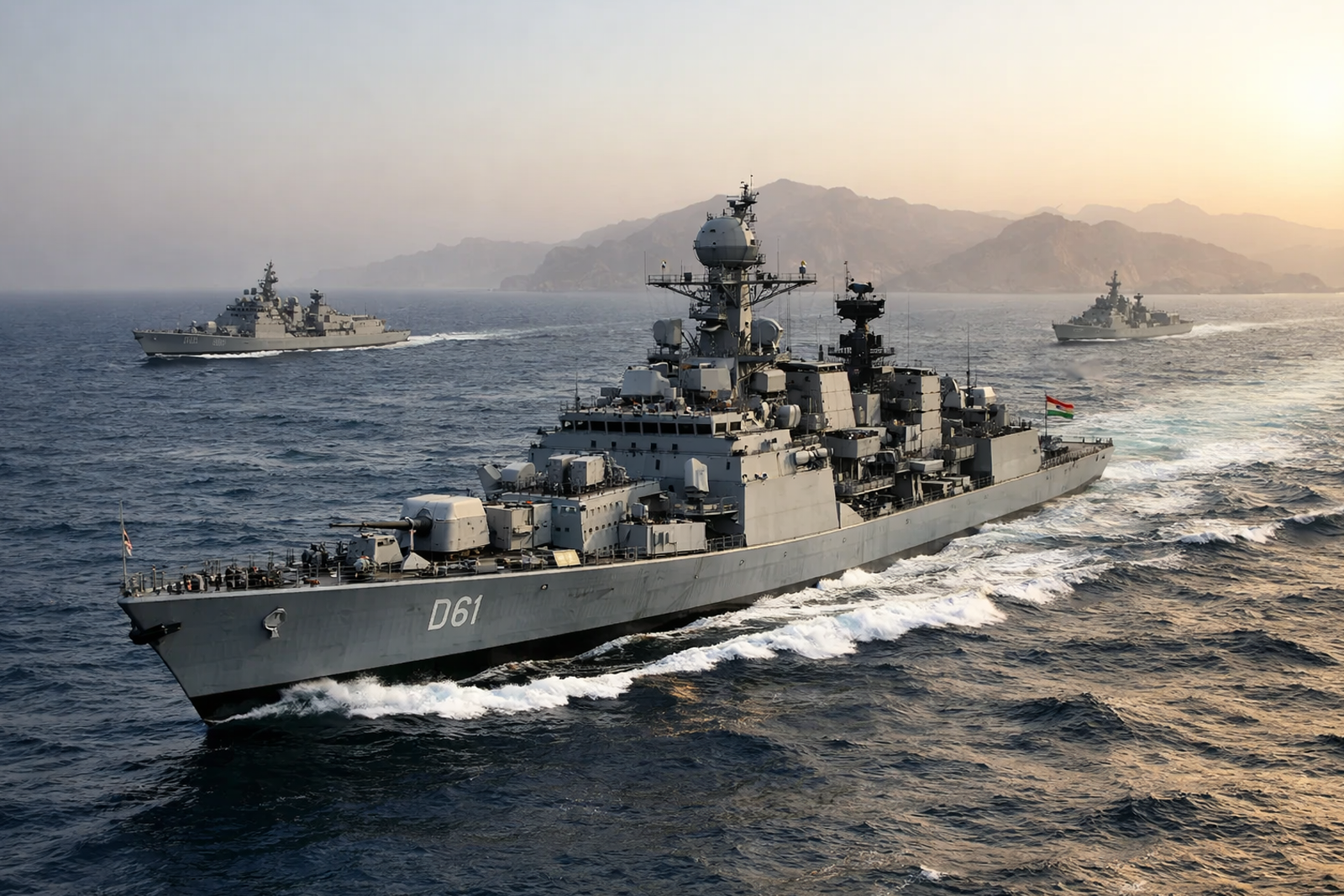
The Indian Navy has reinforced its maritime presence in the strategically important Gulf of Oman by deploying three warships to monitor regional developments and safeguard commercial shipping routes. The move comes at a time when global attention is focused on security in the Middle East’s key maritime corridors. Among the deployed vessels, the guided-missile destroyer INS Delhi has successfully been granted clearance to pass through the vital Strait of Hormuz.
The deployment reflects India’s ongoing commitment to ensuring the safety of international sea lanes. The Gulf of Oman serves as a crucial gateway linking the Arabian Sea with the Strait of Hormuz, through which a large portion of the world’s oil supply is transported. By positioning naval assets in the area, the Indian Navy aims to enhance surveillance and remain prepared to respond quickly to any maritime security challenges.
The Strait of Hormuz remains one of the most critical shipping routes in the world. Any disruption in this narrow passage could significantly impact global energy markets and trade. The successful clearance of INS Delhi through the strait demonstrates continued coordination and monitoring efforts by naval forces operating in the region. Indian naval officials have emphasized that the mission is primarily focused on protecting merchant vessels and maintaining freedom of navigation.
India has increasingly taken an active role in ensuring maritime stability across the Indian Ocean region. The deployment of multiple warships highlights the country’s readiness to protect its strategic and economic interests while contributing to regional security. As geopolitical tensions and security concerns continue to evolve, the Indian Navy’s presence in the Gulf of Oman underscores its role as a key maritime security provider in the broader Indo-Pacific region.
The Indian Navy has strengthened its operational presence in the strategically significant Gulf of Oman by deploying three warships to monitor maritime activity and ensure the safety of key international shipping routes. Among the deployed vessels, the guided-missile destroyer INS Delhi has successfully received clearance to pass through the crucial Strait of Hormuz, a narrow maritime passage that connects the Persian Gulf with the open waters of the Arabian Sea.
The deployment highlights India’s commitment to maintaining maritime stability and protecting commercial shipping lanes that are essential for global trade and energy transportation.
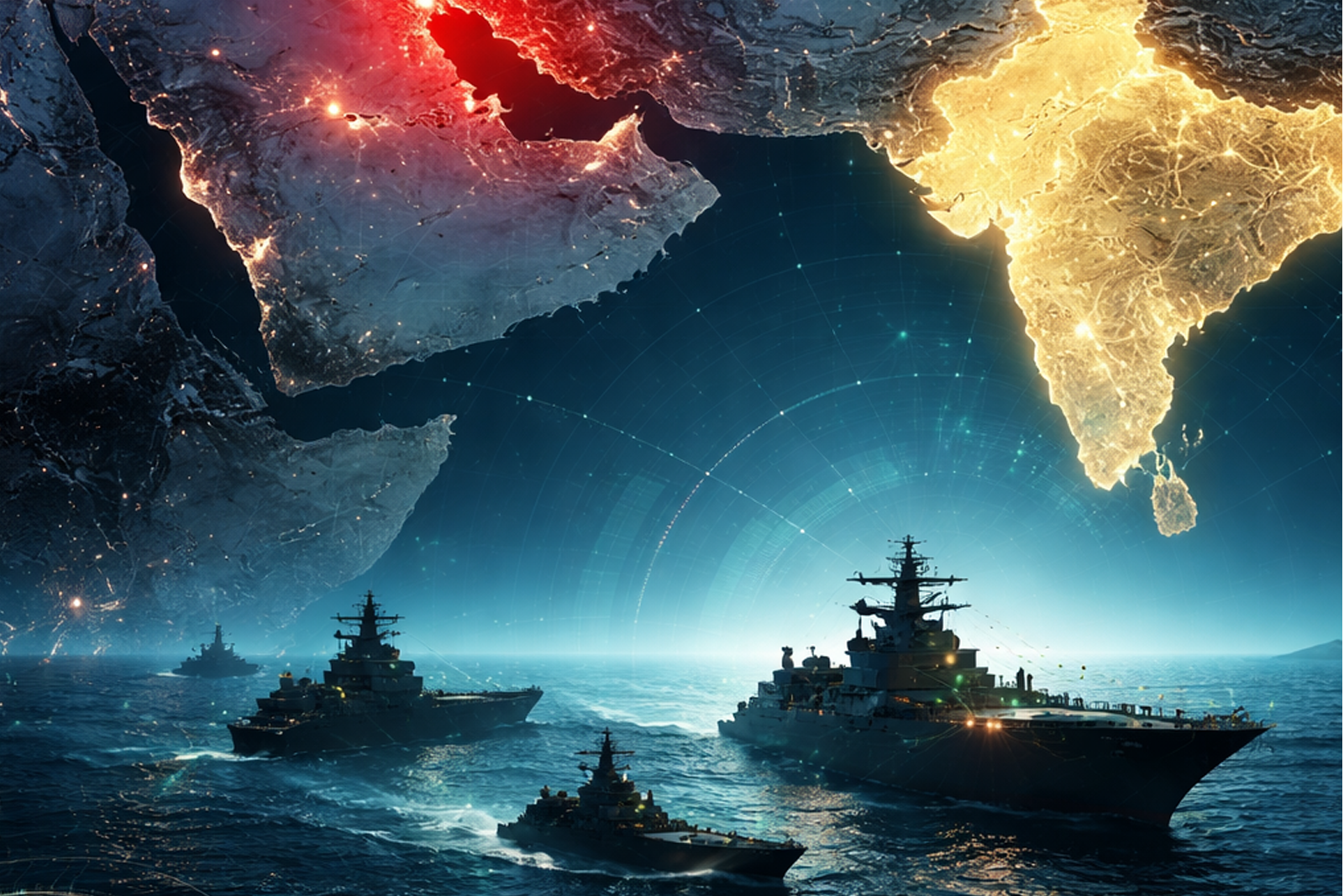
The Gulf of Oman is a key maritime region linking the Arabian Sea with the Persian Gulf. It acts as a major route for cargo ships, oil tankers, and naval vessels traveling between Asia, Europe, and the Middle East. Because of its geographical position, the area has long been considered strategically important for both economic and security reasons.
A large portion of the world’s crude oil shipments passes through the nearby Strait of Hormuz. Any disruption in this region could have a direct impact on international energy supplies and global markets. This is why several nations maintain a naval presence in the surrounding waters to ensure uninterrupted maritime traffic.
India’s deployment of warships in the Gulf of Oman is part of a broader effort to maintain vigilance and ensure that sea lanes remain open and secure for international commerce.
Equipped with advanced radar systems, surface-to-air missiles, anti-ship weapons, and anti-submarine capabilities, the vessel plays a crucial role in maritime defense and surveillance.
During this mission, INS Delhi successfully cleared passage through the Strait of Hormuz, demonstrating the navy’s operational readiness and ability to navigate sensitive maritime corridors. The vessel’s presence also reflects India’s growing capacity to conduct long-range naval operations and maintain a strategic presence beyond its immediate coastline.
Warships like INS Delhi are designed to perform multiple tasks, including escorting merchant vessels, conducting surveillance missions, and responding to potential security threats at sea.
The safety of sea lanes is vital for global economic stability. Every day, thousands of ships carrying fuel, raw materials, and consumer goods pass through the waters near the Strait of Hormuz. Because the strait is relatively narrow, it is considered one of the most sensitive maritime chokepoints in the world.
The Indian Navy’s presence in the region helps in several ways:
Monitoring maritime activity and identifying unusual movements of vessels.
Protecting merchant ships traveling through high-traffic routes.
Responding quickly to emergencies, including piracy or maritime accidents.
Supporting international efforts to keep shipping lanes open and secure.
These measures ensure that maritime trade continues smoothly despite geopolitical uncertainties.
Over the past decade, India has steadily increased its maritime capabilities to safeguard its interests across the Indian Ocean region. As one of the world’s fastest-growing economies, India relies heavily on sea routes for trade and energy imports.
The Indian Navy frequently conducts patrols and deployments in areas that are crucial to global shipping. These operations allow the navy to maintain situational awareness, cooperate with friendly nations, and respond to potential threats in real time.
By deploying multiple warships to the Gulf of Oman, India signals its readiness to contribute to regional stability and maritime security. The mission also reflects the country’s broader strategic focus on the Indo-Pacific region, where sea routes play a central role in economic connectivity.
Maritime security in the Gulf of Oman and surrounding waters often involves cooperation among several naval forces. Countries with trade interests in the region regularly coordinate surveillance, share information, and conduct joint exercises to prevent disruptions.
India has actively participated in such cooperative efforts, working with partners to strengthen maritime domain awareness and enhance safety in busy shipping corridors. These collaborations help improve communication between navies and ensure rapid response during emergencies at sea.
The deployment of Indian warships also complements broader international initiatives aimed at maintaining peace and stability in the region’s waterways.
The Strait of Hormuz is widely recognized as one of the most important maritime chokepoints in the world. Situated between Iran and Oman, the narrow waterway is the primary route for oil exports from several Gulf nations.
A significant percentage of the world’s energy supply travels through this strait, making its security a top priority for many countries. Even minor disruptions can influence global energy prices and affect international markets.
The successful transit of INS Delhi through the strait highlights the continued importance of naval coordination and monitoring in ensuring that shipping traffic moves safely and efficiently.
As global trade continues to expand and maritime routes remain essential for economic growth, the role of naval forces in protecting sea lanes will only become more important. India’s deployment of warships in the Gulf of Oman demonstrates the country’s commitment to safeguarding international shipping and maintaining stability in critical maritime zones.
The mission also reinforces the Indian Navy’s capability to operate across vast oceanic regions while supporting the broader goal of secure and open seas. With evolving geopolitical dynamics and growing maritime activity, such deployments are expected to remain a key part of India’s defense and security strategy in the years ahead.

In today’s world of endless choices and digital noise, marketing is no longer just about promoting products — it’s about creating meaningful connections. Successful brands focus on building relationships rather than chasing transactions. Marketing that connects transforms audiences into loyal communities by earning their trust, understanding their needs, and delivering genuine value. When businesses prioritize people over promotions, marketing becomes more than strategy — it becomes a relationship built to last.

Odisha’s small businesses are entering a new era — where mobile apps, online payments, and e-commerce aren’t luxuries, but lifelines for growth and survival.

As India enters the second phase of its digital revolution, artificial intelligence and automation are not just transforming industries—they’re redefining what it means to work, earn, and adapt.

The conference brought together officials from ten central districts, including district collectors, tehsildars, registrars, and welfare officers, either virtually or in person.

We glorified sleepless nights, burnout, and exhaustion as signs of ambition. But when did working yourself to the edge become the definition of success?

Not everyone who thrives in tech writes code. Some design the very experiences that make technology human.



Leave Comments