- Loading...
- Loading...


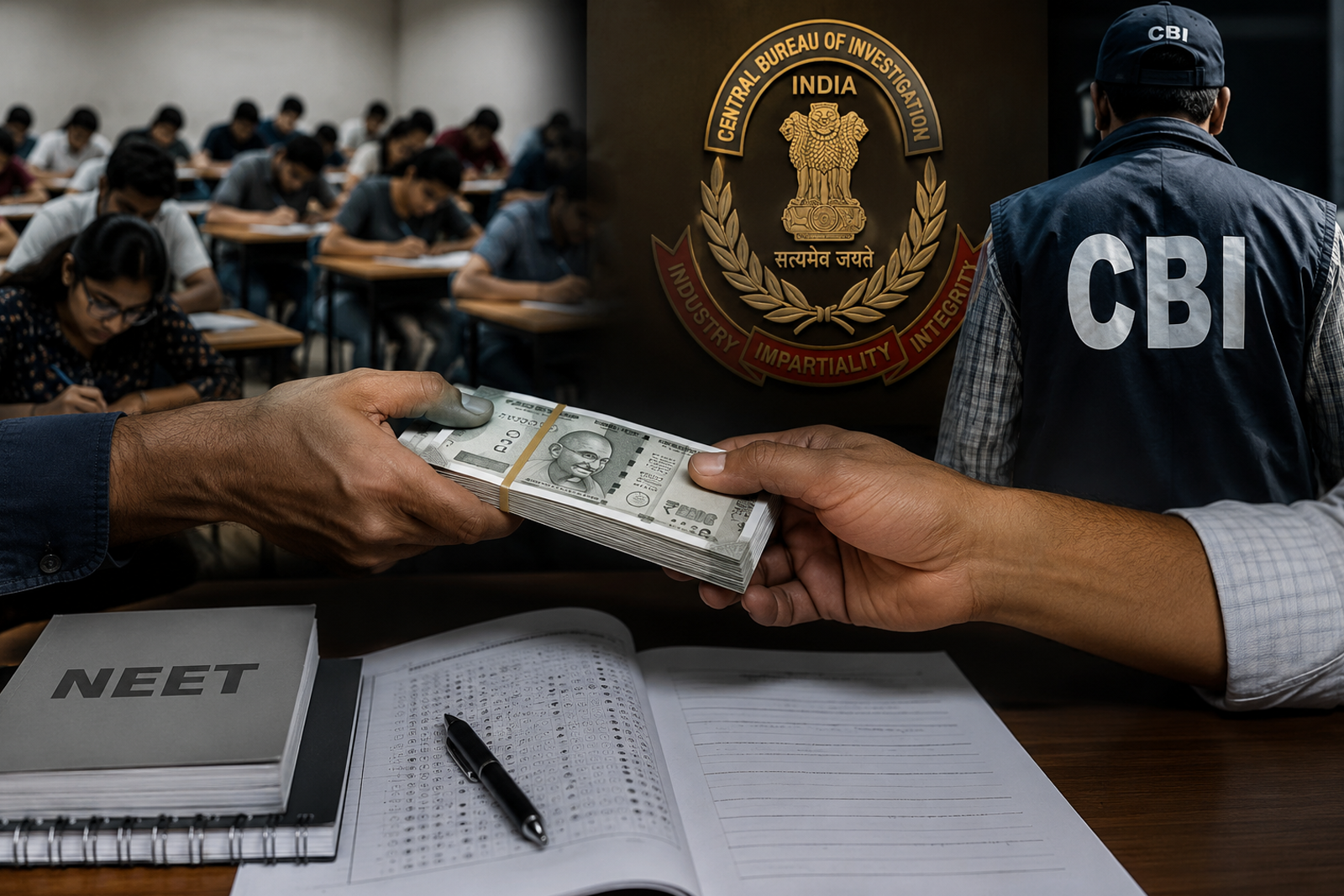
The investigation into the alleged irregularities surrounding the National Eligibility cum Entrance Test (NEET) has taken a significant turn after the Central Bureau of Investigation (CBI) claimed that a coaching institute owner from Latur paid ₹5 lakh to a paper-setter associated with the National Testing Agency (NTA). According to investigators, the payment was allegedly intended to gain unauthorized access to confidential examination questions before the test was conducted.
The latest findings have intensified scrutiny over the security measures adopted for one of India's most competitive entrance examinations, which is taken annually by lakhs of aspiring medical students.
According to the agency, the accused coaching operator allegedly established contact with an individual involved in preparing the NEET question paper. Investigators believe financial transactions were used to facilitate the exchange of sensitive examination material.
The CBI has reportedly collected digital evidence, financial records, and witness statements as part of its ongoing probe. Officials are examining whether the incident was an isolated attempt or part of a broader network involving multiple individuals connected to the examination process.
The allegations have once again highlighted concerns regarding the security of national-level competitive examinations. Education experts believe that even isolated attempts to compromise confidential papers can undermine public confidence in the fairness of the examination system.
Authorities are expected to review existing safeguards, including paper-setting procedures, encryption protocols, transportation, and digital monitoring systems to prevent future breaches.
The accused individuals are expected to face charges under relevant provisions of criminal law and public examination regulations if the allegations are substantiated during the investigation. The CBI has indicated that further questioning and forensic analysis are underway to determine the complete sequence of events.
Investigators are also examining whether any candidates received unfair advantages through the alleged conspiracy.
The latest developments serve as a reminder of the importance of maintaining transparency and accountability in large-scale entrance examinations. With millions of students depending on merit-based selection for admission into medical colleges, authorities are under increasing pressure to ensure robust security mechanisms and swift action against any attempt to manipulate the examination process.
The investigation remains ongoing, and the final outcome will depend on the evidence presented before the courts. Until then, the case continues to draw nationwide attention as stakeholders await further updates on one of the country's most closely watched examination probes.
The Central Bureau of Investigation (CBI) has revealed a significant development in its ongoing probe into the alleged irregularities linked to the National Eligibility cum Entrance Test (NEET). According to the investigating agency, a coaching institute owner based in Latur, Maharashtra, allegedly paid ₹5 lakh to an individual associated with preparing the NEET question paper for the National Testing Agency (NTA). Investigators claim the payment was intended to obtain confidential examination questions before the examination was conducted.
The allegation forms part of the broader investigation into suspected attempts to compromise the integrity of one of India's largest and most competitive entrance examinations. While the matter is still under judicial scrutiny, the latest disclosures have renewed public debate over examination security, transparency, and accountability.
According to the CBI's investigation, the coaching institute owner allegedly established contact with a person involved in the confidential paper-setting process. Investigators claim that ₹5 lakh was transferred as part of an arrangement to illegally access sensitive examination material before the scheduled test.
The agency has reportedly relied on financial records, electronic communication, witness testimonies, and forensic analysis while reconstructing the sequence of events. Officials are also examining whether additional intermediaries helped facilitate the alleged transaction.
It is important to note that these remain allegations made during an ongoing investigation, and the accused are entitled to due legal process until a court reaches its conclusions.
NEET is India's single national entrance examination for undergraduate medical courses, including MBBS, BDS, AYUSH, veterinary, and several allied health science programmes. Every year, millions of students compete for a limited number of seats in government and private institutions.
The examination is considered one of the country's most competitive tests because admission opportunities depend almost entirely on performance in a single examination. Any allegation of question paper leakage or unfair practices therefore attracts nationwide attention.
Students spend years preparing for NEET, often investing significant financial resources in coaching and study materials. Consequently, even isolated attempts to compromise the examination can affect public trust.
The National Testing Agency (NTA) conducts several major entrance examinations across India, including NEET, JEE Main, CUET, and UGC-NET. The agency is responsible for maintaining strict confidentiality throughout the examination process.
The paper-setting process generally involves multiple layers of security, including:
The latest allegations have prompted renewed discussions about strengthening these security mechanisms even further.
The CBI is reportedly examining multiple aspects of the alleged conspiracy. Investigators are attempting to determine:
The agency has also analysed electronic devices, banking transactions, communication records, and digital evidence collected during searches.
Officials continue to question several individuals connected with the case.
If the allegations are proven in court, those involved could face prosecution under multiple provisions of Indian criminal law as well as laws governing public examinations and corruption-related offences.
Possible legal consequences may include:
The final determination, however, will depend entirely on the evidence examined during judicial proceedings.
News surrounding alleged examination leaks often creates anxiety among students and parents. Many aspirants dedicate several years to preparing for NEET through disciplined study schedules and repeated mock examinations.
Whenever questions arise regarding examination integrity, students worry about:
Education experts have repeatedly stressed that protecting honest candidates must remain the highest priority.
Several education policy observers believe the incident, if established, highlights the need for additional safeguards in conducting national examinations.
Suggested reforms include:
Artificial intelligence-based monitoring and advanced encryption can reduce the possibility of unauthorized access.
Independent audits of examination procedures before and after every major examination could strengthen accountability.
Individuals involved in confidential paper preparation may undergo periodic security verification throughout the examination cycle.
Investigators believe suspicious financial transactions linked to sensitive examination officials should receive closer scrutiny.
Anonymous reporting systems could encourage individuals to report suspicious activity before examinations are conducted.
Competitive examinations serve as the foundation of merit-based admissions in India. Public confidence depends not only on secure question papers but also on transparent investigations whenever allegations emerge.
Swift investigations, independent oversight, and timely judicial proceedings help reassure students that authorities are committed to protecting the examination system.
Educational institutions, coaching centres, regulators, and enforcement agencies all share responsibility for preserving fairness.
The CBI investigation remains active, and further evidence may emerge as questioning and forensic examinations continue. Authorities are expected to file additional documents before the appropriate courts as the case progresses.
The National Testing Agency is also likely to continue reviewing and strengthening its examination protocols to minimise future risks.
For millions of students preparing for upcoming entrance examinations, the ultimate objective remains the same—a transparent, secure, and merit-based system where success depends solely on knowledge and performance.
Until the judicial process reaches its conclusion, the allegations remain part of an ongoing investigation. The outcome of the case could play a significant role in shaping future examination security policies and reinforcing confidence in India's competitive examination framework.

In today’s world of endless choices and digital noise, marketing is no longer just about promoting products — it’s about creating meaningful connections. Successful brands focus on building relationships rather than chasing transactions. Marketing that connects transforms audiences into loyal communities by earning their trust, understanding their needs, and delivering genuine value. When businesses prioritize people over promotions, marketing becomes more than strategy — it becomes a relationship built to last.

Odisha’s small businesses are entering a new era — where mobile apps, online payments, and e-commerce aren’t luxuries, but lifelines for growth and survival.

As India enters the second phase of its digital revolution, artificial intelligence and automation are not just transforming industries—they’re redefining what it means to work, earn, and adapt.

The conference brought together officials from ten central districts, including district collectors, tehsildars, registrars, and welfare officers, either virtually or in person.

We glorified sleepless nights, burnout, and exhaustion as signs of ambition. But when did working yourself to the edge become the definition of success?

Not everyone who thrives in tech writes code. Some design the very experiences that make technology human.







Leave Comments