- Loading...
- Loading...


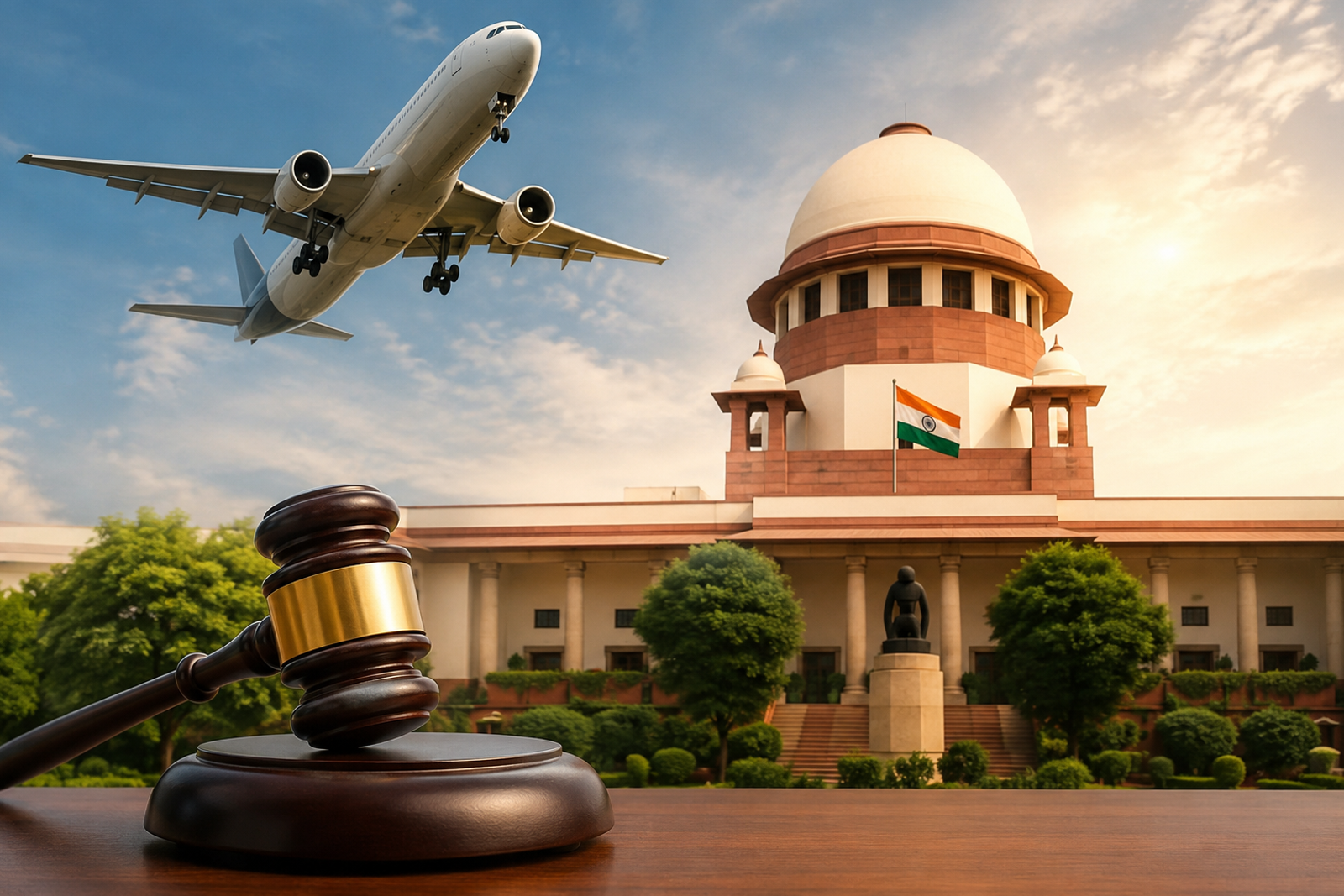
The Supreme Court has directed the Central Government to complete the rule-making process under the Bharatiya Vayuyan Adhiniyam within the next two weeks, highlighting the importance of implementing the country's updated aviation legal framework without further delay. The court observed that while the legislation has already been enacted, its effective enforcement depends on the timely notification of supporting rules. The order is expected to accelerate administrative action and bring greater clarity to India's aviation regulatory system.
Every major law requires detailed rules to define how it will operate in practice. These rules guide government agencies, aviation authorities, airlines, airport operators, and passengers on the implementation of legal provisions. Without them, several sections of the Act cannot be fully enforced, creating uncertainty for regulators and industry stakeholders.
The Bharatiya Vayuyan Adhiniyam is intended to modernize India's aviation governance by replacing outdated provisions with a framework better suited to current technological, operational, and safety requirements. The pending rules are expected to provide clarity on regulatory procedures, compliance standards, and enforcement mechanisms.
During the hearing, the Supreme Court expressed concern over the prolonged delay in finalizing the rules despite the law already being in force. The bench emphasized that legislative reforms should be followed by prompt administrative action to ensure the objectives of Parliament are achieved. It directed the Centre to notify the rules within two weeks, underscoring the need for accountability and timely governance.
The notification of these rules is likely to benefit multiple stakeholders across the aviation ecosystem. Airlines and airport authorities will receive clearer operational guidelines, while regulators will gain a stronger legal framework for oversight and enforcement. Passengers may also benefit from more transparent safety standards and regulatory procedures.
Industry experts believe that completing the rule-making process will improve legal certainty, strengthen aviation governance, and support India's rapidly growing aviation sector.
The Supreme Court's deadline places renewed focus on the implementation of the Bharatiya Vayuyan Adhiniyam. As India continues to expand its aviation infrastructure and passenger traffic reaches new highs, a clear and effective regulatory framework will be essential. The coming weeks will determine how quickly the government completes the final step needed to make the new aviation law fully operational.
The Supreme Court has issued a firm directive to the Central Government, asking it to finalize and notify the rules under the Bharatiya Vayuyan Adhiniyam within two weeks. The observation came after the Court noted that although Parliament had enacted the new aviation law, the absence of supporting rules was preventing its full implementation. The order highlights the judiciary's emphasis on ensuring that legislative reforms are followed by timely administrative action.
India's aviation industry is among the fastest-growing in the world, with expanding domestic routes, increasing passenger traffic, and major investments in airport infrastructure. In such a rapidly evolving sector, an updated legal framework is essential for maintaining safety, transparency, and operational efficiency. The Supreme Court's intervention is expected to speed up the process and provide certainty to all stakeholders.
The Bharatiya Vayuyan Adhiniyam represents India's effort to modernize aviation laws and replace outdated legal provisions with a framework that reflects present-day aviation requirements.
The legislation aims to:
However, every law requires detailed operational rules before it can function effectively. These rules define how authorities should implement the Act and how regulated entities must comply with its provisions.
During the hearing, the Supreme Court observed that considerable time had passed since the legislation was enacted, yet the necessary implementation rules had not been notified.
The Court emphasized that:
The bench therefore directed the Centre to complete the rule-making process within two weeks.
Rules are essential because they convert broad legal principles into practical procedures.
The upcoming rules are expected to clarify:
Without these rules, several provisions of the Act cannot be implemented effectively.
The notification of the rules will provide greater certainty for the aviation sector.
Airlines will receive detailed guidance regarding compliance obligations, reducing ambiguity in operations.
Clear regulations can strengthen passenger rights by defining operational responsibilities and safety standards.
Safety remains the backbone of aviation. Updated implementation rules can enhance inspection systems, emergency preparedness, and regulatory oversight.
Government agencies will have clearly defined procedures for licensing, approvals, and enforcement.
A transparent legal framework encourages domestic and international investment in aviation infrastructure.
Commercial airlines stand to benefit from a well-defined regulatory structure.
Possible advantages include:
A stable legal environment also helps airlines plan long-term investments and fleet expansion.
Airport authorities rely on clear regulations to manage infrastructure, security, passenger movement, and operational safety.
The rules could help by:
Passengers are among the biggest beneficiaries of an effective aviation regulatory framework.
Potential improvements include:
As air travel becomes increasingly common across India, robust legal protections become even more important.
India has witnessed remarkable growth in aviation over the past decade.
Key developments include:
A modern legal framework is necessary to support this expansion while maintaining safety and efficiency.
Rule-making is one of the most important stages after any legislation is passed.
Delays may result in:
Timely notification ensures that the objectives of Parliament are achieved without unnecessary obstacles.
The Supreme Court's observation also reflects the broader principle of administrative accountability.
Courts generally expect governments to:
The judiciary's role is not to draft rules but to ensure that the executive fulfills its legal responsibilities within a reasonable timeframe.
Although the Court has fixed a two-week deadline, the government must ensure that the final rules are comprehensive and practical.
Authorities will need to balance:
A carefully prepared framework will help avoid future legal and administrative complications.
Over the coming weeks, attention will remain focused on the government's response.
Possible next steps include:
The notified rules will mark the final stage in bringing the Bharatiya Vayuyan Adhiniyam into full effect.
The Supreme Court's direction has placed renewed urgency on completing the implementation of the Bharatiya Vayuyan Adhiniyam. While the legislation represents an important milestone in modernizing India's aviation laws, its practical impact depends on the timely notification of detailed rules. By setting a two-week deadline, the Court has reinforced the importance of efficient governance and administrative accountability.
Once the rules are officially notified, India's aviation ecosystem—including regulators, airlines, airport operators, investors, and millions of passengers—is expected to benefit from a clearer, more transparent, and modern regulatory framework. As the country continues to strengthen its position as one of the world's fastest-growing aviation markets, effective implementation of the new law will play a crucial role in supporting safe, efficient, and sustainable growth.

In today’s world of endless choices and digital noise, marketing is no longer just about promoting products — it’s about creating meaningful connections. Successful brands focus on building relationships rather than chasing transactions. Marketing that connects transforms audiences into loyal communities by earning their trust, understanding their needs, and delivering genuine value. When businesses prioritize people over promotions, marketing becomes more than strategy — it becomes a relationship built to last.

Odisha’s small businesses are entering a new era — where mobile apps, online payments, and e-commerce aren’t luxuries, but lifelines for growth and survival.

As India enters the second phase of its digital revolution, artificial intelligence and automation are not just transforming industries—they’re redefining what it means to work, earn, and adapt.

The conference brought together officials from ten central districts, including district collectors, tehsildars, registrars, and welfare officers, either virtually or in person.

We glorified sleepless nights, burnout, and exhaustion as signs of ambition. But when did working yourself to the edge become the definition of success?

Not everyone who thrives in tech writes code. Some design the very experiences that make technology human.









Leave Comments