- Loading...
- Loading...


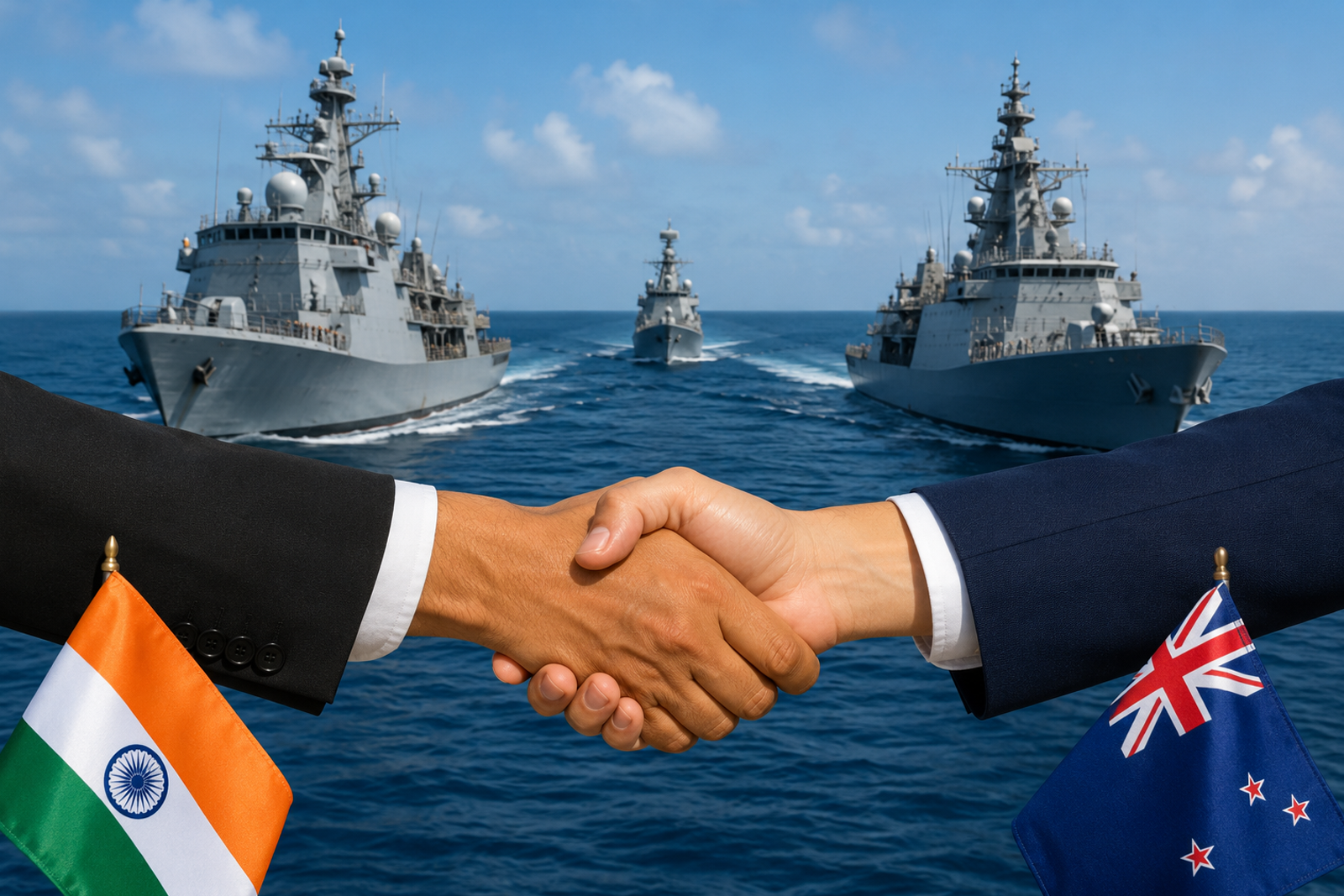
India and New Zealand have taken another significant step toward strengthening their bilateral relationship by expanding cooperation in maritime security while continuing efforts to finalize and ratify their long-awaited Free Trade Agreement (FTA). The latest developments reflect a shared commitment to enhancing economic growth, regional stability, and strategic collaboration in the Indo-Pacific region.
As maritime challenges continue to evolve across the Indo-Pacific, both countries have emphasized closer cooperation in ensuring safe, secure, and open sea routes. India and New Zealand agreed to deepen collaboration in areas such as maritime domain awareness, disaster response, naval engagement, and information sharing. These initiatives aim to improve regional security and support international efforts to maintain freedom of navigation and peaceful maritime trade.
The growing maritime partnership also highlights the importance both nations place on safeguarding critical shipping lanes that are essential for global commerce. Regular dialogue, joint training opportunities, and greater coordination between maritime agencies are expected to strengthen mutual trust and operational readiness.
Alongside strategic cooperation, progress on the proposed Free Trade Agreement has generated optimism among businesses and policymakers in both countries. Although the ratification process has moved gradually, recent discussions indicate that both governments remain committed to completing the agreement.
Once implemented, the FTA is expected to reduce trade barriers, encourage investment, and improve market access for exporters from both nations. Sectors including agriculture, education, technology, renewable energy, food processing, and digital services are likely to benefit from increased commercial cooperation.
Trade between India and New Zealand has steadily expanded over the past several years, supported by growing business partnerships and people-to-people connections. Both governments have also expressed interest in promoting innovation, research collaboration, clean energy projects, and academic exchanges.
Beyond economic cooperation, the partnership reflects shared democratic values and a common vision for a stable, inclusive, and rules-based Indo-Pacific. By working together on regional challenges, the two countries aim to contribute to peace, sustainable development, and economic resilience.
The renewed focus on maritime security and the steady progress toward the Free Trade Agreement demonstrate that India and New Zealand are building a broader strategic partnership. As negotiations continue and new areas of cooperation emerge, both nations are positioning themselves for stronger diplomatic, economic, and security ties in the years ahead. The evolving relationship is expected to create new opportunities for businesses, strengthen regional connectivity, and reinforce cooperation across the Indo-Pacific.
India and New Zealand are entering a new phase of bilateral cooperation by placing greater emphasis on maritime security while continuing efforts to finalize their long-discussed Free Trade Agreement (FTA). The latest engagement between the two countries reflects a shared determination to build stronger economic ties and enhance collaboration across the Indo-Pacific region.
While trade negotiations have progressed gradually over the years, both governments have reaffirmed their commitment to concluding the agreement. At the same time, expanding cooperation at sea has emerged as a major pillar of the relationship, highlighting the growing strategic importance of the Indo-Pacific in global affairs.
The evolving partnership demonstrates that India and New Zealand are looking beyond traditional diplomacy and focusing on practical cooperation that supports regional peace, economic growth, and long-term sustainability.
One of the key outcomes of recent discussions is the increased focus on maritime cooperation. Both countries recognize that secure and open sea routes are essential for international trade, energy supplies, and economic stability.
Areas of maritime collaboration include:
India has consistently emphasized the importance of a secure Indo-Pacific, while New Zealand has expressed similar support for maintaining a peaceful and rules-based maritime environment. Their shared approach reflects a commitment to ensuring that regional waters remain open, safe, and accessible for all nations.
The proposed India–New Zealand Free Trade Agreement has been under discussion for several years. Although negotiations have advanced at a measured pace, recent diplomatic engagement has renewed confidence that both sides are working toward a mutually beneficial outcome.
The agreement is expected to:
Once ratified, the FTA could significantly increase bilateral trade while providing businesses with greater certainty and improved commercial opportunities.
A stronger economic partnership would benefit industries in both countries by creating new investment opportunities and encouraging cross-border cooperation.
New Zealand is internationally recognized for its dairy, meat, and agricultural exports, while India has a diverse agricultural sector and growing food-processing industry. Improved market access could strengthen trade in high-quality agricultural products and modern farming technologies.
India's rapidly expanding technology sector can contribute software development, artificial intelligence solutions, cybersecurity expertise, and digital services. Collaboration with New Zealand's innovation ecosystem may generate opportunities for startups and technology companies.
Both nations have ambitious sustainability goals. Cooperation in renewable energy, clean technologies, green hydrogen, and climate-friendly infrastructure could become a major area of future partnership.
Educational exchanges have long connected the two countries. Expanded collaboration between universities and research institutions could encourage student mobility, academic partnerships, and innovation-driven research.
The Indo-Pacific has become one of the world's most strategically significant regions. As global trade increasingly depends on secure maritime routes, cooperation among regional partners has gained importance.
India and New Zealand share several common objectives:
Their collaboration reflects a broader commitment to maintaining an open and inclusive Indo-Pacific that supports prosperity for all participating nations.
Although India and New Zealand are not formal military allies, defence engagement has steadily expanded through official dialogues, professional exchanges, and security consultations.
Areas receiving greater attention include:
These initiatives strengthen mutual understanding while improving coordination during regional emergencies and humanitarian missions.
Economic cooperation between India and New Zealand extends well beyond goods. Increasing investment flows, digital trade, financial services, tourism, and professional services are becoming important components of bilateral relations.
Businesses in both countries are exploring opportunities in:
Greater economic integration could diversify trade while reducing dependence on traditional export markets.
Climate change remains a shared concern for both governments. India and New Zealand have committed themselves to sustainable development and environmental responsibility.
Potential areas of cooperation include:
Joint initiatives in these sectors can contribute to global climate goals while supporting economic development.
One of the strongest foundations of India–New Zealand relations is the growing interaction between their citizens. The Indian community in New Zealand continues to contribute significantly to business, education, healthcare, information technology, and cultural life.
Tourism, educational exchanges, cultural festivals, sporting events, and professional cooperation have strengthened mutual understanding between the two societies.
As travel and business interactions increase, people-to-people ties are expected to play an even greater role in supporting bilateral relations.
Despite positive momentum, several issues remain before the Free Trade Agreement can be finalized.
Key challenges include:
Both governments have indicated their willingness to continue negotiations while seeking solutions that benefit businesses and consumers in both countries.
The growing emphasis on maritime cooperation and the gradual progress toward the Free Trade Agreement indicate that India and New Zealand are building a broader strategic partnership based on shared interests rather than short-term objectives.
As global economic and geopolitical conditions continue to evolve, both nations recognize the value of stronger collaboration in trade, security, technology, education, and sustainable development.
If the Free Trade Agreement is successfully ratified and maritime cooperation continues to expand, the partnership could become one of the most significant examples of modern Indo-Pacific cooperation. Businesses would gain improved access to new markets, investors would benefit from greater certainty, and both countries would strengthen their ability to respond collectively to regional and global challenges.
The renewed momentum demonstrates that India and New Zealand are committed to creating a relationship that extends beyond diplomacy—one built on economic opportunity, strategic trust, and a shared vision for a secure, prosperous, and resilient Indo-Pacific region.

In today’s world of endless choices and digital noise, marketing is no longer just about promoting products — it’s about creating meaningful connections. Successful brands focus on building relationships rather than chasing transactions. Marketing that connects transforms audiences into loyal communities by earning their trust, understanding their needs, and delivering genuine value. When businesses prioritize people over promotions, marketing becomes more than strategy — it becomes a relationship built to last.

Odisha’s small businesses are entering a new era — where mobile apps, online payments, and e-commerce aren’t luxuries, but lifelines for growth and survival.

As India enters the second phase of its digital revolution, artificial intelligence and automation are not just transforming industries—they’re redefining what it means to work, earn, and adapt.

The conference brought together officials from ten central districts, including district collectors, tehsildars, registrars, and welfare officers, either virtually or in person.

We glorified sleepless nights, burnout, and exhaustion as signs of ambition. But when did working yourself to the edge become the definition of success?

Not everyone who thrives in tech writes code. Some design the very experiences that make technology human.


Leave Comments