- Loading...
- Loading...


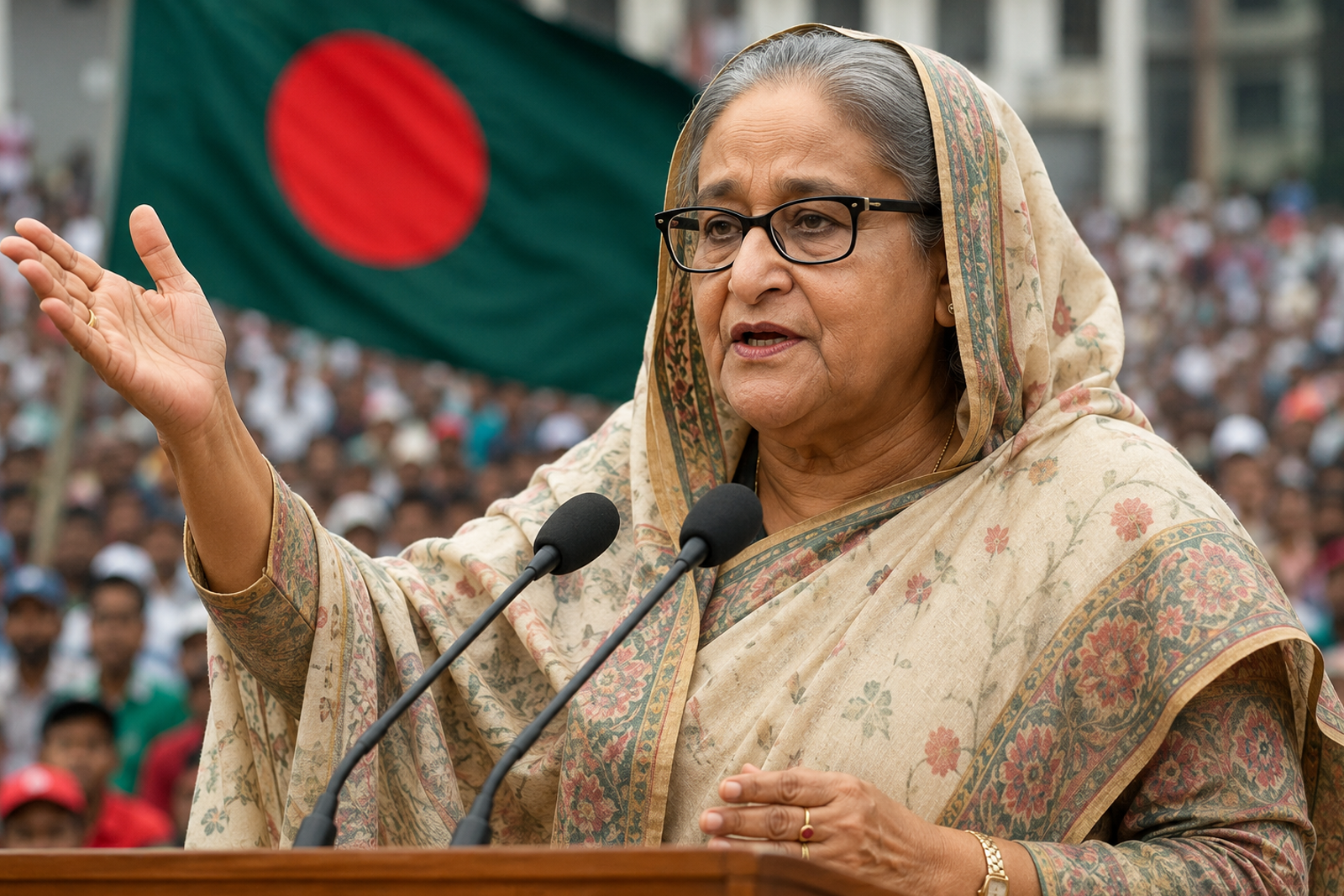
Former Bangladesh Prime Minister Sheikh Hasina has announced that she intends to return to the country in December along with senior leaders of the Awami League to surrender before the authorities. The announcement comes amid continuing political uncertainty following her removal from office and has quickly become one of the most discussed developments in South Asian politics.
Hasina's decision signals that she is prepared to face the legal and political challenges awaiting her instead of remaining outside the country. The move has sparked widespread debate among political observers, supporters, and opposition groups, who see the planned return as a defining moment for Bangladesh's democratic future.
If Sheikh Hasina returns as planned, she is expected to face ongoing investigations and legal proceedings linked to allegations that emerged after the political transition. While her party maintains that the cases are politically motivated, opponents argue that the legal process should proceed independently.
The Awami League has indicated that several senior party leaders are also willing to accompany Hasina during her return. Their decision reflects an effort to demonstrate unity and confidence despite the party's current political difficulties.
The announcement has intensified discussions across Bangladesh regarding governance, accountability, and political reconciliation. Analysts believe Hasina's return could reshape the country's political environment, particularly if it encourages dialogue between rival political forces.
Supporters view the planned surrender as an act of accountability and determination, while critics remain skeptical about its political implications. The coming months are expected to witness increased political activity as parties prepare for possible legal proceedings and renewed public engagement.
Bangladesh's political developments continue to attract close attention from neighboring countries and the international community.
International analysts suggest that the manner in which Bangladesh handles Hasina's return and any subsequent legal proceedings will influence the country's democratic image and diplomatic relations.
With December approaching, political parties, legal institutions, and citizens are closely watching preparations for Sheikh Hasina's expected return. Whether the event leads to political reconciliation or deeper divisions will depend on how both the government and opposition respond in the months ahead.
The planned surrender represents more than a personal decision—it has the potential to become a significant chapter in Bangladesh's evolving political history, carrying implications for governance, justice, and the country's future democratic direction.
Bangladesh is once again at the center of regional political attention after former Prime Minister Sheikh Hasina announced her intention to return to the country in December and surrender before the authorities alongside senior leaders of the Awami League. The announcement comes months after a dramatic political transition that reshaped the nation's leadership and created uncertainty about the future of one of South Asia's most influential political parties.
The proposed return has generated widespread discussion across political circles, legal experts, international observers, and the Bangladeshi public. While supporters describe the move as a demonstration of accountability and confidence, critics believe it could trigger another phase of political confrontation. Regardless of differing opinions, the announcement marks a significant moment in Bangladesh's evolving political journey.
Sheikh Hasina's declaration of returning to Bangladesh instead of remaining abroad has surprised many political observers. By expressing her willingness to surrender before the legal authorities, she has signaled that she intends to address the challenges through legal and constitutional processes.
The announcement has also strengthened the message that senior members of the Awami League are prepared to stand together during this crucial period. Party leaders believe that facing legal proceedings collectively reflects their confidence in defending their political record.
The timing of the planned return is attracting considerable attention.
Political analysts believe December could become an important month because it allows sufficient time for legal preparations, political consultations, and security arrangements. It may also provide both the government and opposition an opportunity to prepare for the legal procedures expected after Hasina's arrival.
The choice of timing suggests that the return is being carefully planned rather than being an immediate political reaction.
Once Sheikh Hasina returns to Bangladesh, she is expected to face multiple legal proceedings initiated after the change in government.
Some of the major legal issues may include:
Her legal team is expected to contest the allegations through the country's judicial system.
Meanwhile, Awami League leaders continue to maintain that the accusations against their leadership are politically motivated and should be examined through an independent judicial process.
The announcement has reinforced unity within the Awami League despite the political setback faced by the party.
Senior leaders have reportedly expressed their willingness to accompany Sheikh Hasina during her return. Party members believe that standing together during legal proceedings demonstrates solidarity and commitment to democratic politics.
Political observers note that maintaining organizational unity will be one of the biggest challenges for the Awami League in the coming months.
Authorities are expected to make extensive security and legal preparations if the planned return takes place.
Possible government actions may include:
Officials have not yet provided detailed information regarding the expected legal process.
Opposition parties have responded cautiously to the announcement.
Some leaders argue that every individual should face legal proceedings equally before the law, irrespective of political status.
Others believe the return could increase political activity across the country and influence future political strategies ahead of upcoming elections.
Several opposition representatives have emphasized that legal institutions should function independently without political interference.
Bangladesh's citizens have expressed mixed reactions.
Many supporters consider Sheikh Hasina's decision a courageous step that demonstrates confidence in the judicial process.
Others believe the return could create fresh political tensions during an already sensitive period.
Social media platforms have witnessed intense discussions, with opinions differing widely across political affiliations.
Despite these differences, there is broad agreement that the situation will significantly influence Bangladesh's political environment.
The political developments have attracted attention from neighboring countries and global diplomatic circles.
International observers are monitoring the situation because Bangladesh plays an important role in South Asia through:
Diplomatic missions are expected to closely observe how legal proceedings unfold after Hasina's return.
Many international organizations continue to encourage peaceful political dialogue and adherence to constitutional processes.
Political uncertainty often affects investor confidence.
Economists suggest that prolonged political instability could influence:
However, if legal proceedings remain peaceful and transparent, analysts believe Bangladesh's economy may continue to demonstrate resilience due to its strong manufacturing and export sectors.
The proposed surrender carries symbolic importance beyond legal proceedings.
Political experts believe the event will test:
The manner in which authorities manage the situation may shape public confidence in national institutions.
Several outcomes remain possible after Sheikh Hasina's return:
The judicial process moves forward without major political unrest.
Supporters and opposition parties organize demonstrations across different parts of Bangladesh.
The situation encourages broader discussions regarding democratic reforms and political reconciliation.
Court proceedings continue for an extended period while political debates remain active.
Bangladesh's political stability is important for South Asia.
Neighboring countries closely monitor developments because Bangladesh contributes significantly to regional cooperation through:
Any major political development within Bangladesh naturally attracts regional interest.
As December approaches, several developments are expected:
These events will likely dominate Bangladesh's political agenda in the coming months.
Sheikh Hasina's announcement that she intends to return to Bangladesh in December and surrender alongside senior Awami League leaders represents one of the most significant political developments in recent times. The decision has reignited debate over accountability, democratic governance, and the future of Bangladesh's political landscape.
While supporters view the move as an opportunity to defend her legacy through legal channels, opponents insist that all proceedings should remain impartial and transparent. Much now depends on how state institutions, political parties, and civil society respond when the planned return takes place.
The coming months are expected to be crucial for Bangladesh as the country balances legal processes, political stability, and public confidence. Whether this moment becomes the beginning of political reconciliation or another chapter of confrontation will largely depend on the commitment of all stakeholders to constitutional principles, peaceful dialogue, and the rule of law.

In today’s world of endless choices and digital noise, marketing is no longer just about promoting products — it’s about creating meaningful connections. Successful brands focus on building relationships rather than chasing transactions. Marketing that connects transforms audiences into loyal communities by earning their trust, understanding their needs, and delivering genuine value. When businesses prioritize people over promotions, marketing becomes more than strategy — it becomes a relationship built to last.

Odisha’s small businesses are entering a new era — where mobile apps, online payments, and e-commerce aren’t luxuries, but lifelines for growth and survival.

As India enters the second phase of its digital revolution, artificial intelligence and automation are not just transforming industries—they’re redefining what it means to work, earn, and adapt.

The conference brought together officials from ten central districts, including district collectors, tehsildars, registrars, and welfare officers, either virtually or in person.

We glorified sleepless nights, burnout, and exhaustion as signs of ambition. But when did working yourself to the edge become the definition of success?

Not everyone who thrives in tech writes code. Some design the very experiences that make technology human.


Leave Comments