- Loading...
- Loading...


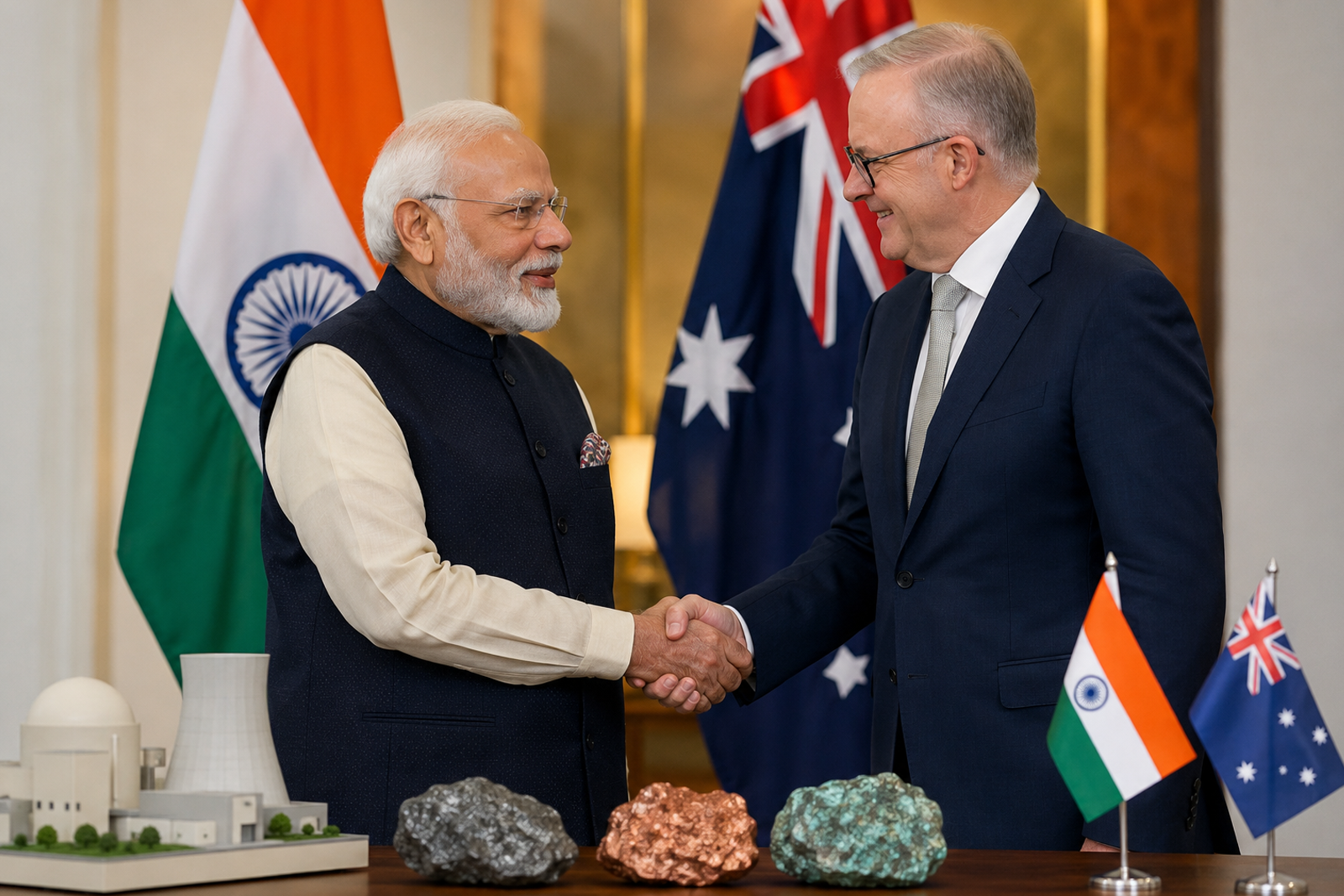
India and Australia have entered a significant new phase in their bilateral relationship with the signing of a landmark uranium supply agreement and a broader commitment to deepen cooperation in nuclear energy, critical minerals, defence, and clean technology. During high-level talks, Prime Minister Narendra Modi described the partnership as "historic," highlighting its importance for India's long-term energy security and sustainable economic growth.
The agreement reflects the growing trust between the two nations, which have steadily expanded cooperation across trade, security, education, and technology over the past decade. The uranium deal is expected to support India's expanding civilian nuclear energy programme, helping the country diversify its clean energy sources while reducing dependence on fossil fuels.
Both leaders reaffirmed their commitment to building a resilient and future-focused partnership that aligns with shared democratic values and common strategic interests in the Indo-Pacific region.
Alongside nuclear cooperation, India and Australia agreed to strengthen collaboration in the exploration, processing, and supply of critical minerals such as lithium, cobalt, nickel, and rare earth elements. These minerals are essential for manufacturing electric vehicle batteries, renewable energy infrastructure, advanced electronics, and defence technologies.
The partnership aims to establish reliable supply chains, encourage investment, and reduce dependence on limited global suppliers.
The uranium agreement is expected to play a vital role in India's clean energy transition. Expanding nuclear power generation will help the country meet its rising electricity demand while supporting its climate commitments and net-zero ambitions.
The two countries also discussed increasing investments, promoting technology exchange, and encouraging private sector participation in mining, energy, and infrastructure projects. Businesses from both nations are expected to benefit from stronger commercial ties and new investment opportunities.
Apart from energy and minerals, India and Australia reiterated their commitment to enhancing defence cooperation, maritime security, cyber resilience, and regional stability in the Indo-Pacific. Both sides agreed that closer collaboration is essential to maintaining a free, open, and inclusive regional order.
The leaders also emphasized cooperation in education, innovation, research, and people-to-people exchanges, further strengthening the comprehensive strategic partnership.
The landmark agreements mark another milestone in India-Australia relations, signalling a shared vision for sustainable development, energy security, and regional cooperation. As both nations continue expanding collaboration across multiple sectors, the partnership is expected to contribute significantly to economic growth, technological advancement, and long-term strategic stability in the Indo-Pacific region.
India and Australia have taken a major step toward strengthening their long-term strategic relationship with the signing of a landmark uranium supply agreement and a series of initiatives focused on nuclear energy, critical minerals, trade, and defence cooperation. The agreements, announced during Prime Minister Narendra Modi's official visit to Australia, underline the growing trust between the two Indo-Pacific democracies and their shared commitment to sustainable development, energy security, and regional stability.
They represent a strategic vision aimed at supporting clean energy, resilient supply chains, technological innovation, and stronger economic collaboration in an increasingly interconnected world.
India and Australia have steadily expanded their relationship over the last decade, transforming it from a traditional diplomatic engagement into a comprehensive strategic partnership. Cooperation now extends across defence, trade, education, technology, maritime security, renewable energy, and critical resources.
The newly signed uranium agreement reflects the high level of confidence between the two countries. Australia possesses some of the world's largest uranium reserves, while India is rapidly expanding its civilian nuclear energy capacity to meet rising electricity demand through cleaner energy sources.
The agreement is expected to provide India with a reliable source of uranium fuel while strengthening Australia's position as a trusted energy partner.
India's energy demand continues to rise because of rapid urbanization, industrial expansion, and economic growth. Although renewable energy sources such as solar and wind are expanding quickly, nuclear power remains an important component of the country's long-term clean energy strategy.
Reliable uranium supplies will help India:
Nuclear energy offers stable electricity generation throughout the year, complementing renewable energy sources that depend on weather conditions.
Beyond uranium, both nations agreed to deepen cooperation in critical minerals that are essential for modern industries.
These minerals include:
These resources are vital for manufacturing:
Australia is among the world's leading producers of several critical minerals, while India is rapidly building manufacturing capacity in clean technology and advanced industries.
The partnership aims to create secure and diversified supply chains that reduce global dependence on limited suppliers.
India has set ambitious targets for expanding renewable and low-carbon energy production.
The agreements signed with Australia support these national objectives by:
Experts believe that combining renewable energy with nuclear power can provide a balanced and dependable energy system capable of supporting India's growing economy.
The agreements are expected to generate significant economic benefits.
Potential areas of collaboration include:
Australian companies may expand investments in India's mining and processing industries, while Indian firms could participate in resource development projects in Australia.
Joint research and technology sharing can improve mineral processing, nuclear safety, clean energy production, and advanced manufacturing.
Reliable access to critical minerals will strengthen India's manufacturing ecosystem, particularly in sectors linked to electric mobility and renewable energy.
New projects in mining, logistics, manufacturing, research, and infrastructure are expected to create employment opportunities in both countries.
Energy cooperation forms only one part of the expanding India-Australia relationship.
The two countries also reaffirmed cooperation in:
Both governments emphasized the importance of maintaining a free, open, secure, and rules-based Indo-Pacific region.
Their shared democratic values and commitment to international law continue to strengthen bilateral cooperation.
Education remains one of the strongest pillars of India-Australia relations.
The leaders discussed expanding collaboration through:
Australian universities continue to attract thousands of Indian students every year, while collaborative research projects are growing in fields ranging from healthcare to climate science.
Trade between India and Australia has witnessed strong growth following recent economic agreements.
The latest announcements are expected to further boost:
Business leaders from both countries welcomed the renewed focus on long-term economic cooperation.
Greater connectivity between industries could strengthen regional supply chains and improve market access.
The partnership carries strategic significance beyond bilateral interests.
India and Australia are key members of several regional and international forums that promote cooperation across the Indo-Pacific.
Closer coordination between the two countries is expected to contribute to:
As geopolitical competition increases globally, reliable partnerships among like-minded nations are becoming increasingly important.
Both governments stressed the need to ensure responsible resource development.
Future cooperation will likely focus on:
Balancing economic growth with environmental sustainability remains a shared priority.
Energy experts and industry representatives have largely welcomed the agreements.
Analysts believe that secure uranium supplies can improve India's long-term energy planning, while expanded cooperation in critical minerals may strengthen manufacturing capabilities in sectors linked to electric vehicles, renewable energy, electronics, and advanced technology.
Investors also view the agreements as a positive signal for future bilateral economic engagement.
Despite the positive momentum, several areas will require careful implementation:
Effective coordination between governments and industry will be essential for translating agreements into tangible outcomes.
The agreements signed during Prime Minister Narendra Modi's Australia visit represent more than a diplomatic achievement—they outline a long-term roadmap for cooperation in energy, technology, trade, and strategic security. By combining Australia's resource strength with India's expanding industrial and technological capabilities, both nations are positioning themselves to address future challenges while creating new opportunities for growth.
As implementation progresses, the partnership is expected to enhance clean energy production, strengthen critical mineral supply chains, boost bilateral investment, and reinforce stability across the Indo-Pacific. The uranium deal, together with broader cooperation in nuclear energy and strategic resources, marks a defining chapter in India–Australia relations and sets the stage for a more resilient, sustainable, and future-ready partnership.

In today’s world of endless choices and digital noise, marketing is no longer just about promoting products — it’s about creating meaningful connections. Successful brands focus on building relationships rather than chasing transactions. Marketing that connects transforms audiences into loyal communities by earning their trust, understanding their needs, and delivering genuine value. When businesses prioritize people over promotions, marketing becomes more than strategy — it becomes a relationship built to last.

Odisha’s small businesses are entering a new era — where mobile apps, online payments, and e-commerce aren’t luxuries, but lifelines for growth and survival.

As India enters the second phase of its digital revolution, artificial intelligence and automation are not just transforming industries—they’re redefining what it means to work, earn, and adapt.

The conference brought together officials from ten central districts, including district collectors, tehsildars, registrars, and welfare officers, either virtually or in person.

We glorified sleepless nights, burnout, and exhaustion as signs of ambition. But when did working yourself to the edge become the definition of success?

Not everyone who thrives in tech writes code. Some design the very experiences that make technology human.




Leave Comments