- Loading...
- Loading...


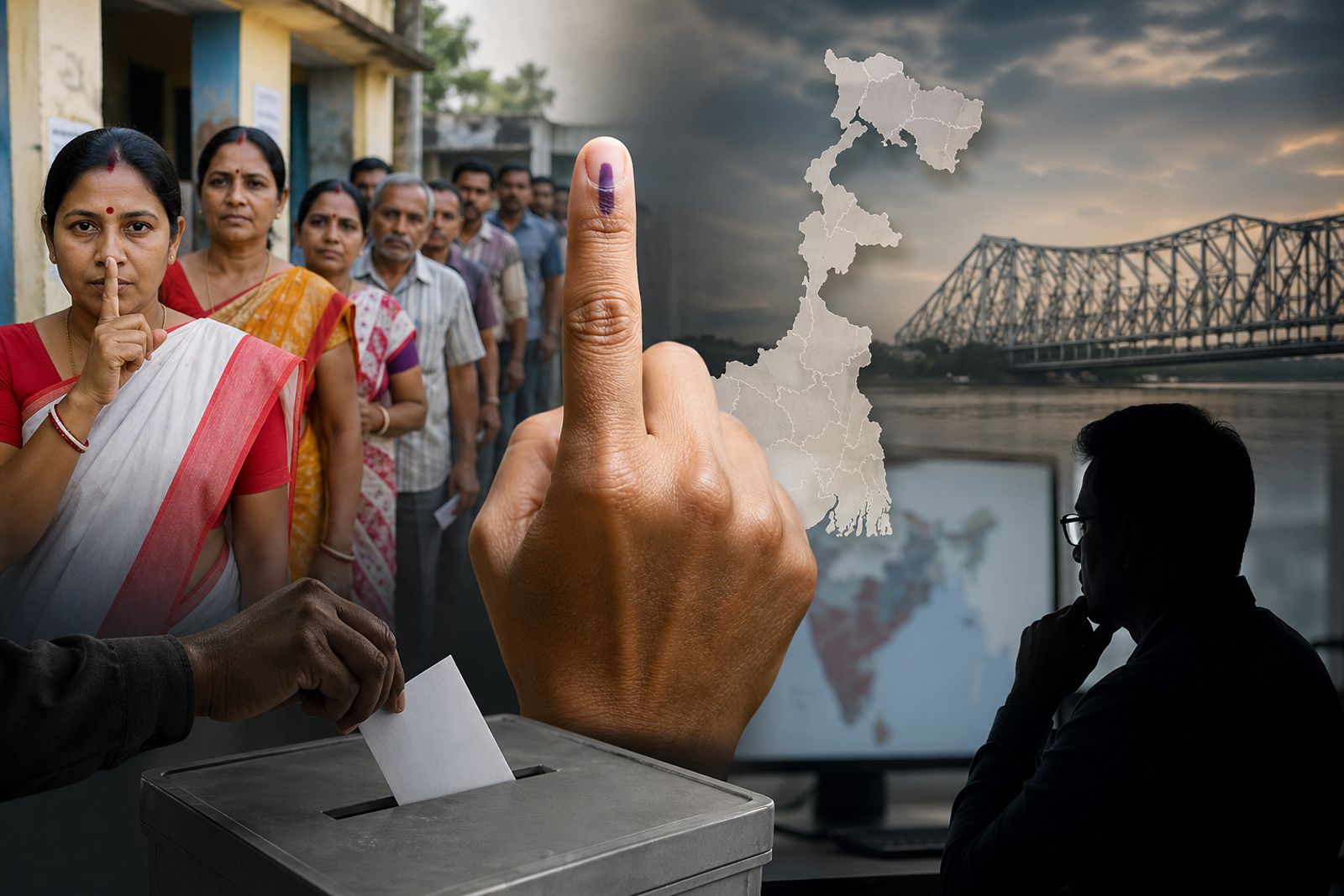
Bengal’s Quiet Verdict: Exit Poll Uncertainty Grows Amid Voter Silence
In an election season usually defined by loud opinions and spirited debates, an unusual quietness has taken hold across West Bengal. As polling phases conclude, the absence of clear voter sentiment has raised questions about the timely release of exit poll data. According to Axis My India, this silence is not just noticeable—it is significant enough to potentially delay the publication of its much-anticipated projections.
Exit polls have long been a crucial element of India’s electoral landscape, offering early insights into possible outcomes before official results are declared. However, their accuracy depends heavily on voter participation and openness. This time, many voters appear hesitant to disclose their choices, creating a gap between polling efforts and reliable data collection. Analysts believe this reluctance could stem from heightened political polarization, fear of judgment, or simply a growing awareness of privacy.
The situation in West Bengal is particularly intriguing given its history of politically charged elections. Traditionally, the state has witnessed strong voter engagement, both at the ballot box and in post-vote discussions. The current silence, therefore, marks a notable departure from past trends and presents a challenge for pollsters trying to interpret the electorate’s mood.
Experts suggest that this shift may reflect a more cautious and discerning voter base. In an age of constant media scrutiny and social media debates, many individuals may prefer to keep their political preferences confidential. This evolving behavior highlights a broader transformation in how citizens interact with democratic processes.
For news platforms and political observers, the delay or uncertainty in exit poll data adds another layer of suspense to an already closely watched election. Without early indicators, parties and analysts alike must wait for official counting day to understand the true direction of the mandate.
As the state awaits clarity, one thing is certain: the silence of Bengal’s voters has become a story in itself—one that underscores the complexity and unpredictability of modern elections.
West Bengal’s electoral landscape is witnessing an unusual phenomenon—silence. In a state known for passionate political discourse and vibrant public participation, the current reluctance of voters to share their choices has surprised pollsters and analysts alike. This unexpected quiet has raised serious concerns about the reliability and timely release of exit poll data, with Axis My India indicating that the muted response from voters could delay its projections.
Exit polls traditionally act as a curtain-raiser to election results, offering a glimpse into the possible outcome before official counting begins. However, their effectiveness relies heavily on voters being open about their choices. This time, the lack of candid responses has disrupted that process, leaving polling agencies with incomplete or uncertain data.
One of the most striking aspects of this election cycle is the evident shift in how voters are engaging with pollsters.
This evolving behavior reflects a deeper transformation in democratic engagement, where participation at the ballot box remains strong, but public expression of political choice is becoming more guarded.
Polling organizations like Axis My India face a complex situation. Their methodologies depend on collecting a representative sample of voter responses. When a significant portion of voters refuses to engage, it creates gaps that are difficult to fill accurately.
In such circumstances, pollsters must rely more on statistical modeling and historical trends, which may not fully capture the current political mood.
The situation in West Bengal is particularly noteworthy due to its politically active history. Elections in the state have traditionally been marked by intense campaigning, high voter turnout, and strong public opinions.
However, this time:
This change does not necessarily indicate a lack of interest. Instead, it suggests that voters are choosing to express their views solely through the ballot, rather than through public or survey-based interactions.
The uncertainty surrounding exit polls has broader implications for political parties, media outlets, and analysts.
For news portals, this creates both a challenge and an opportunity—to focus more on ground reports and less on speculative data.
In recent years, technology has transformed how elections are covered and discussed. However, it may also be contributing to voter silence.
These factors collectively influence how individuals interact with pollsters and the media.
The current scenario highlights the limitations of traditional exit polling methods in a changing social environment. Analysts may need to rethink their approaches to better understand voter behavior.
This shift could mark a turning point in how elections are analyzed in India.
As the state awaits the official counting day, the absence or delay of exit poll data adds an extra layer of suspense. Political observers, parties, and citizens alike must rely on patience rather than projections.
The silence of voters in West Bengal serves as a reminder that democracy does not always need to be loud to be effective. Sometimes, the most powerful expression of choice is made quietly, within the privacy of the voting booth.
West Bengal’s muted voter response has turned the spotlight away from predictions and back onto the core of democracy—the vote itself. While exit polls remain a valuable tool, their limitations are becoming evident in an era where voters value privacy and discretion more than ever.
The current situation underscores a simple yet profound reality: elections are ultimately decided not by forecasts, but by the collective will of the people, revealed only when the ballots are counted.


In today’s world of endless choices and digital noise, marketing is no longer just about promoting products — it’s about creating meaningful connections. Successful brands focus on building relationships rather than chasing transactions. Marketing that connects transforms audiences into loyal communities by earning their trust, understanding their needs, and delivering genuine value. When businesses prioritize people over promotions, marketing becomes more than strategy — it becomes a relationship built to last.

Odisha’s small businesses are entering a new era — where mobile apps, online payments, and e-commerce aren’t luxuries, but lifelines for growth and survival.

As India enters the second phase of its digital revolution, artificial intelligence and automation are not just transforming industries—they’re redefining what it means to work, earn, and adapt.

The conference brought together officials from ten central districts, including district collectors, tehsildars, registrars, and welfare officers, either virtually or in person.

We glorified sleepless nights, burnout, and exhaustion as signs of ambition. But when did working yourself to the edge become the definition of success?

Not everyone who thrives in tech writes code. Some design the very experiences that make technology human.





Leave Comments