- Loading...
- Loading...


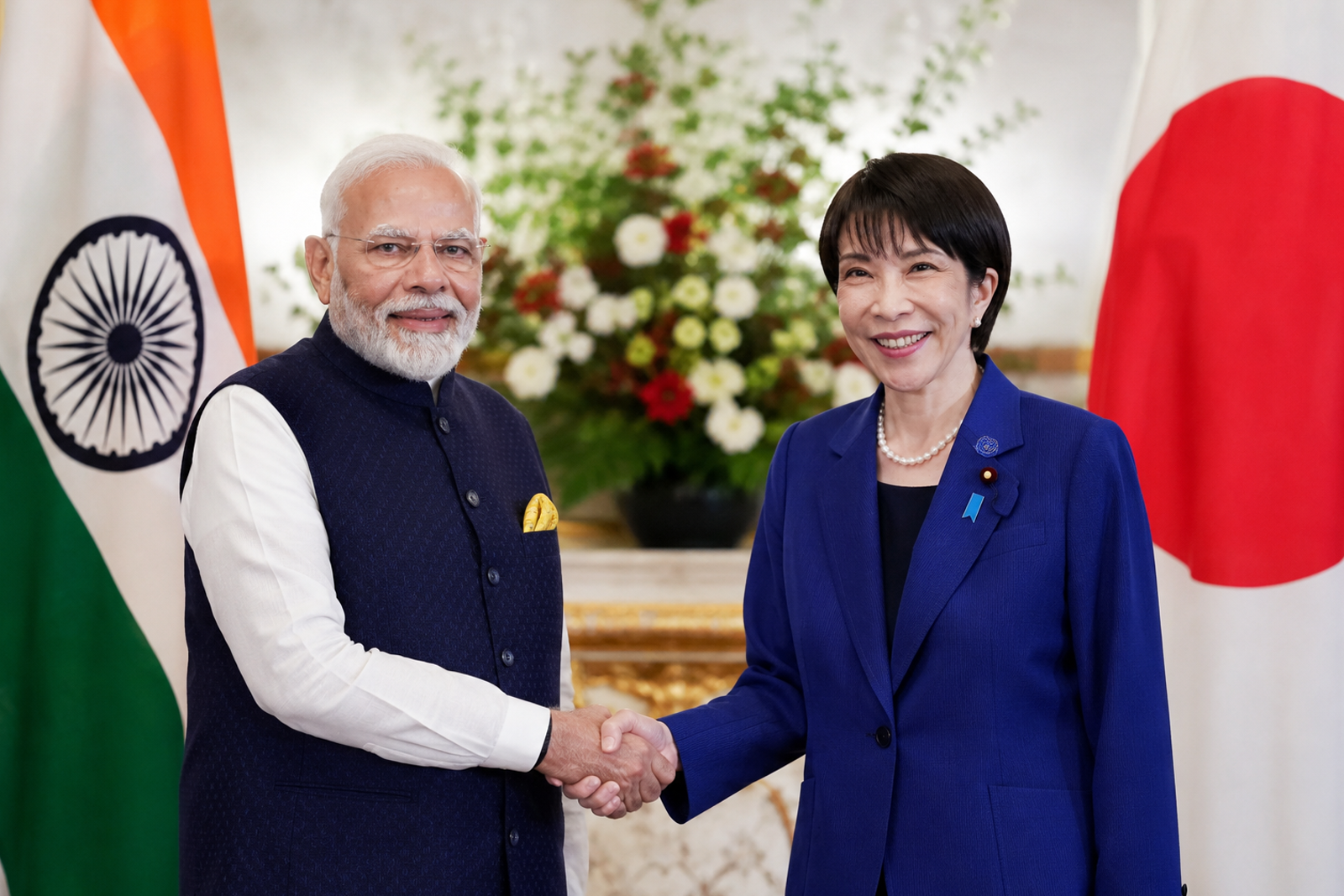
India and Japan have reaffirmed the strength of their long-standing relationship with the announcement of a massive ₹1 trillion investment initiative aimed at accelerating economic growth, technological innovation, and infrastructure development. The announcement came after high-level discussions between Prime Minister Narendra Modi and Japanese Prime Minister Sanae Takaichi, reflecting the growing trust and shared vision between the two Asian democracies.
The proposed investment package is expected to support projects across several strategic sectors, including transportation, clean energy, digital technology, manufacturing, logistics, and industrial development. The initiative is designed to create long-term opportunities for businesses while generating employment and encouraging sustainable economic expansion in India.
Japanese companies have already played a significant role in India's development through investments in automobiles, electronics, and urban infrastructure. The latest financial commitment signals Japan's confidence in India's rapidly growing economy and its potential as a global manufacturing and innovation hub.
A major portion of the investment is likely to be directed toward improving infrastructure and promoting advanced technologies. Areas such as high-speed rail, smart cities, semiconductor manufacturing, artificial intelligence, renewable energy, and resilient supply chains are expected to receive greater attention under the expanded partnership.
Both countries also emphasized the importance of digital transformation and clean energy solutions as part of their long-term economic cooperation strategy.
Beyond economic ties, the meeting highlighted the strategic importance of India-Japan cooperation in maintaining a free, open, and inclusive Indo-Pacific region. The two leaders discussed strengthening collaboration on regional security, maritime cooperation, disaster management, and emerging technologies.
The partnership reflects a common commitment to stability, sustainable development, and rules-based international cooperation in the region.
The ₹1 trillion investment announcement marks another milestone in the evolving India-Japan relationship. As both governments move toward implementing the proposed initiatives, businesses, investors, and industries are expected to benefit from expanded cooperation and stronger bilateral trade.
With shared democratic values, complementary economic strengths, and a focus on innovation, India and Japan are positioning themselves for a future defined by deeper collaboration, resilient supply chains, and sustainable growth. The latest initiatives demonstrate that the partnership is expanding beyond traditional diplomacy into a comprehensive framework that supports economic progress, technological advancement, and regional stability for years to come.
India and Japan have taken another significant step in strengthening one of Asia’s most trusted strategic partnerships. During high-level discussions between Prime Minister Narendra Modi and Japanese Prime Minister Sanae Takaichi, Japan announced an ambitious investment plan worth approximately ₹1 trillion for India. The announcement reflects the growing confidence of Japanese businesses in India's expanding economy and reinforces the commitment of both nations to deepen cooperation across infrastructure, technology, manufacturing, energy, and innovation.
The fresh investment is expected to create new employment opportunities, attract advanced technologies, strengthen industrial capacity, and contribute to India's long-term economic transformation. More importantly, it highlights how India and Japan are working together not only for mutual prosperity but also for stability and sustainable development across the Indo-Pacific region.
India and Japan have enjoyed decades of strong diplomatic and economic ties. Over the years, both countries have collaborated on several flagship infrastructure projects, industrial corridors, metro rail systems, and technology initiatives.
The latest investment commitment represents another milestone in this growing partnership. Rather than focusing on a single project, the proposed funding aims to support multiple sectors that are expected to shape India's future economic growth.
The announcement also demonstrates Japan's long-term confidence in India's business environment and policy reforms.
The investment package is expected to cover several priority sectors that are essential for India's economic development.
These investments are expected to strengthen India's competitiveness in global markets.
Manufacturing remains one of India's strongest priorities under initiatives such as "Make in India."
Japanese companies have long been among India's most reliable manufacturing partners, particularly in sectors including:
The new investment could encourage additional Japanese firms to establish production facilities in India while expanding existing operations.
This would increase exports, improve local supply chains, and create thousands of skilled jobs.
Infrastructure remains one of the strongest pillars of India-Japan cooperation.
Japan has previously supported:
The new investment is expected to accelerate infrastructure modernization across several Indian states.
Improved roads, railways, ports, logistics parks, and industrial hubs will reduce transportation costs while improving business efficiency.
Technology cooperation has become one of the defining features of India-Japan relations.
Both countries are likely to increase collaboration in:
Joint innovation centres and research partnerships may also receive greater attention.
These efforts will help India strengthen its technological capabilities while supporting Japanese companies seeking reliable global partners.
Climate-friendly development remains a shared priority for both governments.
The investment package is expected to support:
India aims to increase renewable energy capacity significantly over the coming years, while Japan continues investing in sustainable technologies.
Their cooperation could accelerate the transition toward cleaner economic growth.
Large-scale foreign investment generally creates employment across multiple sectors.
Potential benefits include:
Young professionals in engineering, IT, manufacturing, and renewable energy are expected to benefit the most.
Recent global disruptions have encouraged countries to diversify supply chains.
India and Japan are working together to build:
The investment will likely help reduce dependence on single-country manufacturing models while enhancing regional economic security.
India's thriving start-up ecosystem presents enormous opportunities for Japanese investors.
Future collaboration may include:
Japanese expertise combined with India's innovation ecosystem could produce globally competitive technologies.
The meeting between the two Prime Ministers was not limited to economic cooperation.
Both leaders discussed broader strategic issues including:
India and Japan continue supporting a free, open, and rules-based Indo-Pacific that promotes peace and secure trade routes.
Indian industries may benefit in several ways.
Small and medium enterprises (SMEs) could also become suppliers to Japanese companies operating in India.
For Japan, India represents one of the world's fastest-growing major economies.
Key advantages include:
While the investment announcement is highly positive, effective implementation will remain important.
Areas requiring continuous attention include:
Successful coordination between governments and private companies will determine the overall impact.
The ₹1 trillion investment represents much more than financial assistance.
It reflects:
As projects begin moving from planning to implementation, both countries are expected to deepen cooperation across several new sectors.
Japan's ₹1 trillion investment commitment marks a defining moment in India-Japan relations. By focusing on infrastructure, advanced manufacturing, clean energy, technology, innovation, and strategic cooperation, both nations are laying the foundation for sustained economic growth and stronger regional partnerships.
For India, the investment offers opportunities to accelerate industrial development, improve infrastructure, generate employment, and strengthen its position as a global manufacturing and technology hub. For Japan, it reinforces access to one of the world's fastest-growing markets while building resilient supply chains and expanding economic engagement in Asia.
As both governments translate these commitments into action, the partnership is expected to deliver long-term benefits that extend beyond trade and investment, shaping a future driven by innovation, sustainability, and shared prosperity.

In today’s world of endless choices and digital noise, marketing is no longer just about promoting products — it’s about creating meaningful connections. Successful brands focus on building relationships rather than chasing transactions. Marketing that connects transforms audiences into loyal communities by earning their trust, understanding their needs, and delivering genuine value. When businesses prioritize people over promotions, marketing becomes more than strategy — it becomes a relationship built to last.

Odisha’s small businesses are entering a new era — where mobile apps, online payments, and e-commerce aren’t luxuries, but lifelines for growth and survival.

As India enters the second phase of its digital revolution, artificial intelligence and automation are not just transforming industries—they’re redefining what it means to work, earn, and adapt.

The conference brought together officials from ten central districts, including district collectors, tehsildars, registrars, and welfare officers, either virtually or in person.

We glorified sleepless nights, burnout, and exhaustion as signs of ambition. But when did working yourself to the edge become the definition of success?

Not everyone who thrives in tech writes code. Some design the very experiences that make technology human.






Leave Comments