- Loading...
- Loading...


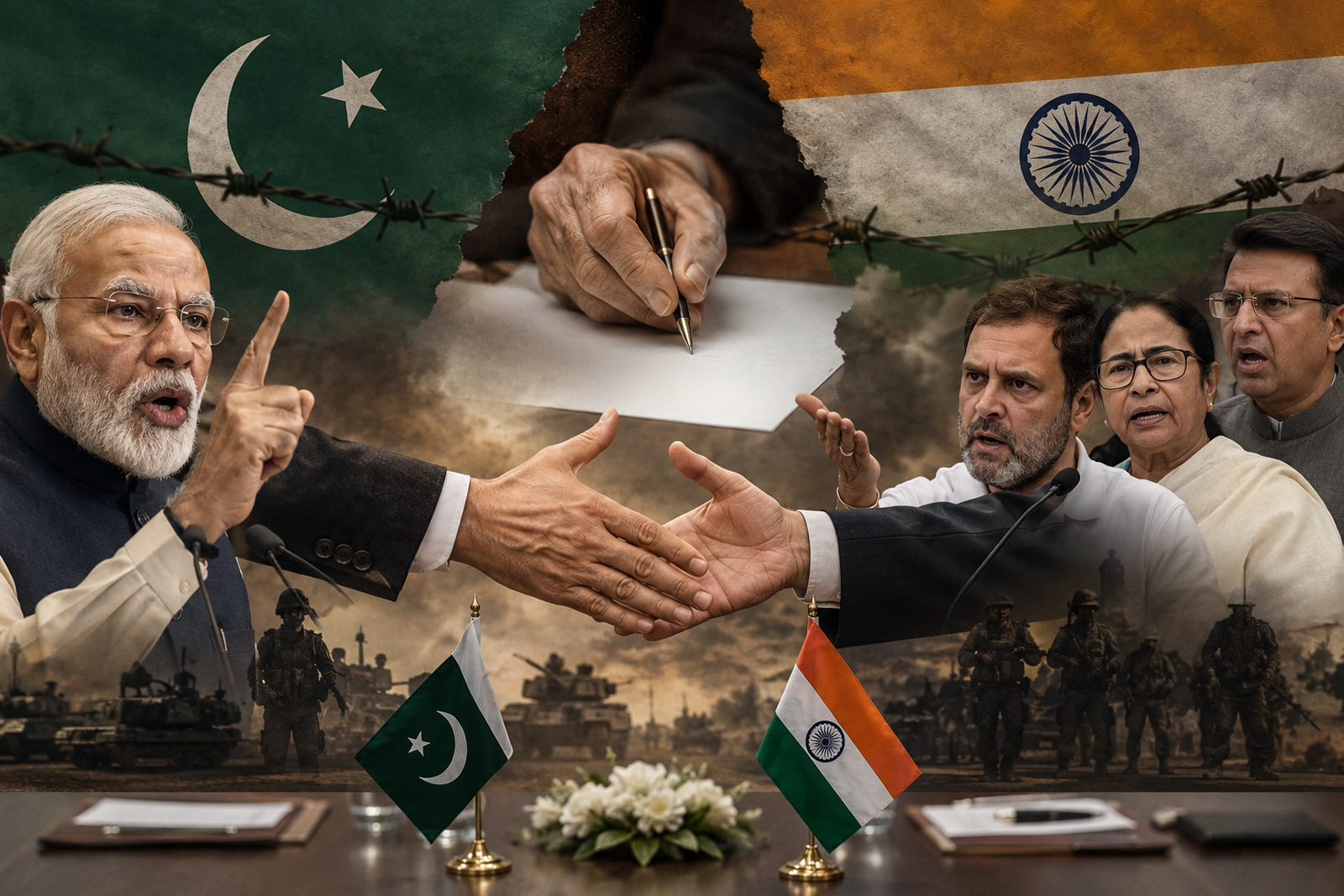
A fresh political debate has emerged after a public letter appealed for renewed diplomatic engagement between India and Pakistan. The appeal, which called for reopening channels of communication between the two neighbouring countries, has drawn contrasting reactions from political parties, highlighting the ongoing divide over national security and foreign policy.
The Bharatiya Janata Party (BJP) strongly criticized the proposal, arguing that peace initiatives cannot move forward without addressing cross-border terrorism and ensuring accountability for past attacks. Party leaders stressed that any dialogue should be based on mutual trust and concrete action against terrorism. They also referred to the Pahalgam attack, saying that such incidents continue to influence public opinion and India's approach towards bilateral relations.
On the other hand, several opposition leaders maintained that diplomacy remains an essential tool for reducing tensions between nuclear-armed neighbours. They argued that communication does not necessarily indicate compromise but can serve as a means to prevent misunderstandings and explore peaceful solutions to long-standing disputes. According to them, dialogue and national security can coexist if handled with clear objectives and safeguards.
The latest controversy reflects the broader challenge India has faced for decades—balancing national security with diplomatic engagement. While governments have periodically attempted to improve relations with Pakistan, progress has often been interrupted by security incidents, leading to the suspension of official talks.
Political observers believe the differing reactions also reflect contrasting visions of how India should manage its relationship with its western neighbour. Supporters of a firm stance argue that terrorism must be completely eliminated before meaningful negotiations can begin. Others believe sustained diplomatic engagement can create opportunities to reduce hostility and promote regional stability over time.
The debate has gained significant attention on social media and in political circles, with supporters on both sides expressing strong opinions. As discussions continue, the issue is expected to remain part of the national political discourse, especially as foreign policy and national security continue to be important topics in India's public life.
Although the letter itself does not represent official government policy, the reactions it has generated underline the sensitivity of India-Pakistan relations. For now, the government has maintained its established position that meaningful dialogue depends on an environment free from terrorism, while opposition leaders continue to advocate keeping diplomatic channels open whenever possible.
A renewed appeal for dialogue between India and Pakistan has once again brought one of South Asia's most sensitive diplomatic issues into the national spotlight. A letter urging both countries to revive peace talks has triggered strong political reactions, with the Bharatiya Janata Party (BJP) and several opposition leaders offering sharply different perspectives. While supporters of the proposal believe diplomacy is necessary to reduce tensions, critics argue that peace cannot be achieved without first addressing the issue of cross-border terrorism and ensuring accountability for past attacks.
The exchange of views has quickly become a major political discussion, reflecting the complex balance between national security, diplomacy, and public sentiment.
The appeal for renewed engagement was intended to encourage peaceful dialogue between India and Pakistan despite years of strained relations. However, instead of generating consensus, the letter has intensified political debate.
Leaders from the BJP questioned the timing and intent of the appeal, stating that calls for peace should not overlook the security concerns faced by India. They argued that terrorism remains the biggest obstacle to meaningful negotiations and that public memory of past attacks cannot simply be ignored.
Opposition leaders, meanwhile, defended the importance of diplomatic engagement. According to them, maintaining communication between neighbouring countries can help reduce misunderstandings, lower tensions, and create opportunities for future cooperation without compromising national interests.
The BJP reiterated its long-standing position that India cannot pursue normal diplomatic relations unless there is visible and sustained action against terrorism.
According to party leaders:
The party also referred to the Pahalgam attack while criticizing the appeal, arguing that victims of terrorism and their families should not be forgotten during discussions about restoring bilateral relations.
Opposition leaders presented a different perspective.
They argued that opening communication channels does not weaken India's security position. Instead, they believe diplomacy is an essential component of responsible foreign policy.
Their key arguments include:
According to opposition representatives, refusing to communicate indefinitely may reduce opportunities for confidence-building between the two countries.
Relations between India and Pakistan have remained complicated since the Partition of 1947.
Over the decades, both countries have experienced:
Despite these challenges, governments from different political backgrounds have periodically explored diplomatic engagement whenever conditions appeared favourable.
One of the biggest obstacles to improving India-Pakistan relations has been the issue of terrorism.
Successive Indian governments have maintained that meaningful dialogue requires an environment free from terrorist activities.
Security concerns continue to influence:
This explains why any proposal involving renewed dialogue often becomes politically sensitive.
National security remains one of the most important issues for Indian voters.
Many citizens believe:
Others argue that maintaining communication can help reduce future conflicts and strengthen regional stability.
This diversity of opinion is reflected in political debates across the country.
Experts often point out that diplomacy and national security are not mutually exclusive.
Many countries continue diplomatic engagement even while addressing security concerns.
Effective foreign policy may involve:
Balancing these priorities remains one of the biggest challenges for policymakers.
Relations between India and Pakistan extend beyond bilateral concerns.
The relationship affects:
Because both countries play important roles in the region, developments in their relationship often attract global attention.
The latest controversy has also become part of the broader domestic political narrative.
As political discussions continue, the debate is expected to remain relevant in Parliament, public forums, and media discussions.
The issue has generated widespread discussion across social media platforms.
Supporters of the government's position argue that security should remain non-negotiable.
Others believe diplomatic engagement is necessary to avoid prolonged hostility between neighbouring countries.
The conversation demonstrates how foreign policy increasingly shapes online political discourse.
Even if calls for renewed dialogue continue, significant challenges remain.
These include:
Without progress on these issues, experts believe any future peace initiative will face considerable obstacles.
The debate surrounding the letter advocating renewed India-Pakistan talks highlights the enduring complexity of one of South Asia's most sensitive relationships. While the BJP has maintained that lasting peace is impossible without decisive action against terrorism and stronger security assurances, opposition leaders continue to argue that diplomacy remains an important instrument for reducing tensions and preventing future conflicts.
The differing viewpoints reflect two distinct approaches to foreign policy—one prioritizing security before engagement and the other emphasizing that dialogue itself can contribute to stability. As discussions continue, India's approach towards Pakistan will remain closely tied to developments in regional security, diplomatic priorities, and the broader national interest. Regardless of political differences, the issue underscores the continuing challenge of balancing peace initiatives with the country's security concerns in an increasingly complex geopolitical environment.

In today’s world of endless choices and digital noise, marketing is no longer just about promoting products — it’s about creating meaningful connections. Successful brands focus on building relationships rather than chasing transactions. Marketing that connects transforms audiences into loyal communities by earning their trust, understanding their needs, and delivering genuine value. When businesses prioritize people over promotions, marketing becomes more than strategy — it becomes a relationship built to last.

Odisha’s small businesses are entering a new era — where mobile apps, online payments, and e-commerce aren’t luxuries, but lifelines for growth and survival.

As India enters the second phase of its digital revolution, artificial intelligence and automation are not just transforming industries—they’re redefining what it means to work, earn, and adapt.

The conference brought together officials from ten central districts, including district collectors, tehsildars, registrars, and welfare officers, either virtually or in person.

We glorified sleepless nights, burnout, and exhaustion as signs of ambition. But when did working yourself to the edge become the definition of success?

Not everyone who thrives in tech writes code. Some design the very experiences that make technology human.


Leave Comments