- Loading...
- Loading...


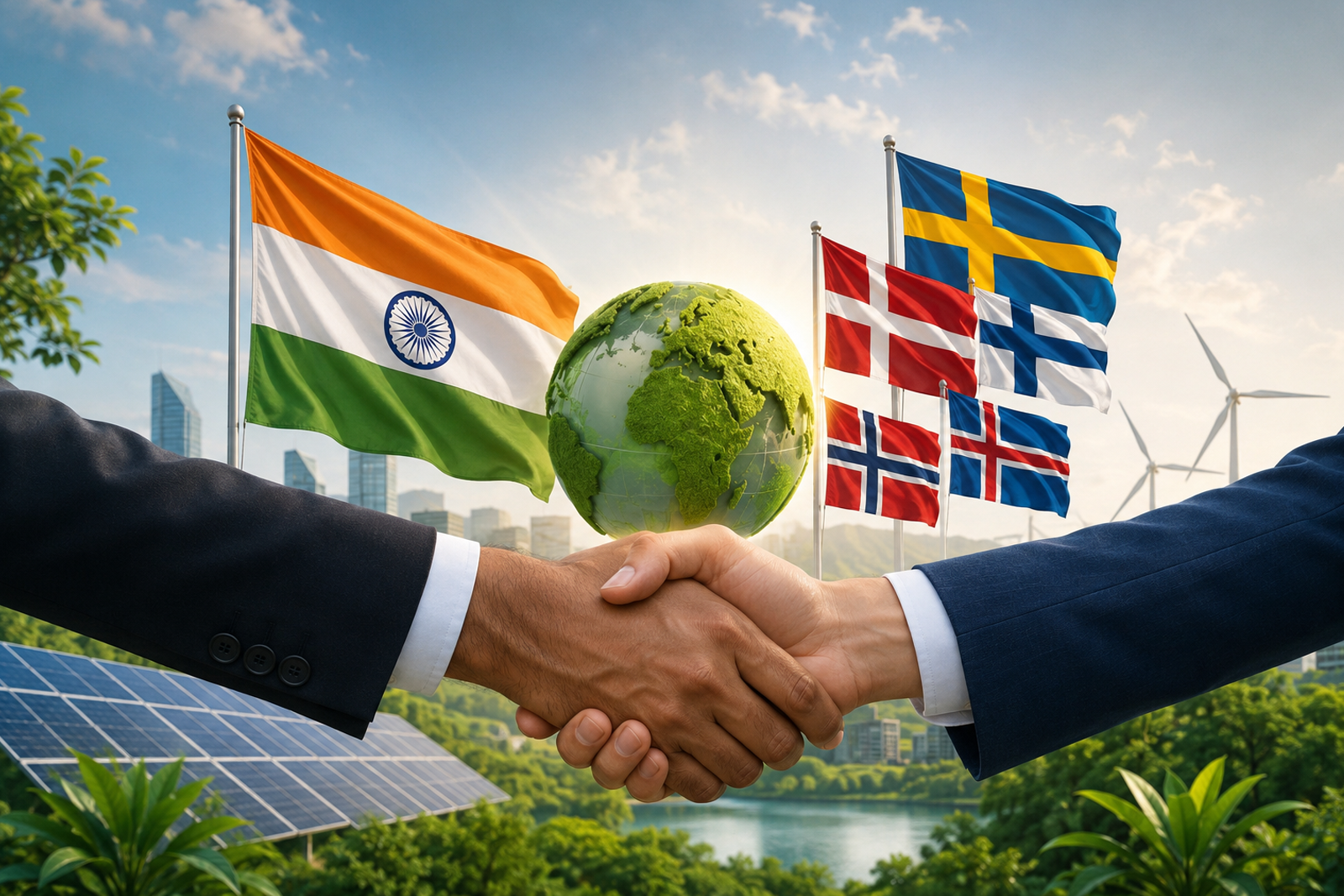
India and the Nordic countries have taken a significant step toward strengthening global cooperation by agreeing to elevate their relationship into a Green Technology and Innovation Strategic Partnership. The move is expected to accelerate collaboration in clean energy, climate-friendly technology, digital innovation, and sustainable economic growth.
The announcement reflects the growing importance of international partnerships in tackling climate change and promoting environmentally responsible development. Leaders from both sides emphasized the need for innovation-driven solutions that can create long-term economic opportunities while protecting natural resources.
One of the major highlights of the partnership is the emphasis on green energy. India and the Nordic nations are expected to work closely on renewable energy projects, including solar, wind, hydrogen fuel, and energy-efficient technologies. Nordic countries are globally known for their leadership in sustainability, while India has rapidly expanded its renewable energy capacity in recent years.
The cooperation aims to help industries reduce carbon emissions and adopt cleaner production methods. Experts believe this partnership could also support India’s transition toward a low-carbon economy by bringing advanced technologies and investment opportunities into the country.
Apart from environmental goals, the agreement also focuses heavily on innovation and digital development. The partnership is likely to encourage collaboration between startups, research institutions, universities, and technology companies from both regions.
Areas such as artificial intelligence, smart cities, clean transportation, and digital infrastructure are expected to receive special attention. By combining Nordic innovation with India’s large technology ecosystem, both sides hope to create scalable solutions for global challenges.
The strategic partnership is also expected to boost trade and investment between India and the Nordic region. Businesses from sectors such as green manufacturing, electric mobility, healthcare technology, and sustainable infrastructure may benefit from stronger cooperation.
Industry leaders have welcomed the initiative, calling it a positive step toward building resilient and future-ready economies. The collaboration could open doors for job creation, technology exchange, and long-term economic growth.
The India-Nordic partnership highlights how nations are increasingly working together to address climate concerns and technological transformation. As global demand for clean energy and sustainable innovation rises, this strategic alliance may play a key role in shaping future economic and environmental policies.
The agreement not only strengthens diplomatic relations but also sends a strong message about the importance of global cooperation in building a greener and more innovative future.
India and the Nordic nations have entered a new phase of cooperation by agreeing to strengthen their relationship through a Green Technology and Innovation Strategic Partnership. The development marks a major diplomatic and economic milestone as both sides seek to work together on climate action, renewable energy, sustainable infrastructure, digital transformation, and future-focused innovation.
The partnership reflects a shared commitment toward building environmentally responsible economies while encouraging technological progress and inclusive growth. With climate challenges becoming more urgent across the globe, India and the Nordic countries are aiming to combine their strengths to create practical and long-term solutions.
The Nordic region, which includes Denmark, Sweden, Norway, Finland, and Iceland, is globally recognized for its advanced green technologies, clean energy systems, and sustainability-driven policies. India, on the other hand, is one of the fastest-growing major economies and has been actively investing in renewable energy, smart infrastructure, and digital modernization.
This collaboration is expected to benefit both regions through investment opportunities, technology sharing, industrial cooperation, and stronger diplomatic ties.
Rising temperatures, environmental degradation, and energy insecurity have pushed countries to search for cleaner and more sustainable alternatives.
The India-Nordic partnership aims to address these concerns by encouraging cooperation in:
Both sides have emphasized that economic growth and environmental protection must move together. The agreement represents a long-term vision where technological innovation is used to reduce environmental impact without slowing development.
One of the most important pillars of the partnership is clean and renewable energy cooperation. India has already emerged as one of the world’s leading renewable energy markets, especially in solar and wind power.
The Nordic nations are known for their expertise in:
Through this collaboration, India is expected to gain access to advanced technologies and technical expertise that can accelerate its clean energy transition.
India has made rapid progress in solar power generation over the last decade. Nordic investment and technology support may help improve efficiency and storage systems.
Nordic companies have strong capabilities in offshore and high-capacity wind power systems. Joint projects could strengthen India’s renewable infrastructure.
Green hydrogen is emerging as a major clean fuel alternative. India and Nordic countries may collaborate on research, production, and industrial applications.
Modern power management systems can reduce energy waste and improve efficiency. Nordic innovation in smart grids could support India’s expanding energy network.
Another major objective of the partnership is promoting innovation-led growth. Both India and the Nordic countries believe that technology can play a key role in solving future economic and environmental challenges.
The agreement is expected to encourage cooperation between:
This could lead to the development of advanced solutions in areas such as artificial intelligence, automation, clean transportation, and sustainable manufacturing.
AI-driven systems can improve energy management, healthcare delivery, urban planning, and industrial productivity.
Nordic countries have experience in sustainable urban design and smart public infrastructure. India’s growing urban population creates opportunities for large-scale collaboration.
Electric vehicles and green transport systems are expected to become an important area of partnership. Joint innovation may help improve battery technology and charging infrastructure.
Both regions are likely to promote recycling, waste reduction, and resource-efficient industrial systems to support sustainable growth.
The partnership is also expected to strengthen economic relations between India and the Nordic nations. Increased cooperation in green industries may attract fresh investments and create new business opportunities.
Nordic companies may view India as a major long-term investment destination due to its large market, skilled workforce, and growing demand for sustainable solutions.
At the same time, Indian companies could benefit from access to advanced research, technology partnerships, and European markets.
Innovation ecosystems in both regions are expected to receive a major boost under the agreement. India has one of the largest startup ecosystems in the world, while Nordic nations are known for high-quality research and technology-driven entrepreneurship.
Young entrepreneurs and researchers may benefit from cross-border partnerships that encourage experimentation and knowledge sharing.
Infrastructure development remains essential for economic growth, but countries are increasingly focusing on sustainability and environmental responsibility.
The India-Nordic partnership may support projects related to:
Nordic expertise in environmentally friendly construction and urban management could help India modernize infrastructure while reducing environmental impact.
Beyond economics and technology, the agreement also reflects growing diplomatic trust between India and the Nordic nations. Stronger cooperation on sustainability and innovation may create opportunities for broader strategic engagement in the future.
The partnership demonstrates how countries from different regions can work together on common global priorities such as climate action, technological advancement, and economic resilience.
International analysts believe such alliances are becoming increasingly important as nations seek collaborative solutions for global problems.
The India-Nordic Green Technology and Innovation Strategic Partnership arrives at a time when countries worldwide are accelerating efforts toward clean energy and sustainable development.
The agreement sends a strong international message that:
Experts believe the partnership could become a model for future international collaborations focused on balancing economic development with environmental responsibility.
The decision by India and the Nordic nations to elevate ties through a Green Technology and Innovation Strategic Partnership marks a major step toward a cleaner and more technology-driven future. By combining India’s scale and growth potential with Nordic expertise in sustainability and innovation, both sides aim to create meaningful progress across energy, infrastructure, trade, and digital transformation.
The partnership highlights the growing importance of global collaboration in addressing climate challenges and building resilient economies. As the world moves toward greener development models, the India-Nordic alliance could emerge as a powerful example of how innovation and sustainability can work together for long-term progress.

In today’s world of endless choices and digital noise, marketing is no longer just about promoting products — it’s about creating meaningful connections. Successful brands focus on building relationships rather than chasing transactions. Marketing that connects transforms audiences into loyal communities by earning their trust, understanding their needs, and delivering genuine value. When businesses prioritize people over promotions, marketing becomes more than strategy — it becomes a relationship built to last.

Odisha’s small businesses are entering a new era — where mobile apps, online payments, and e-commerce aren’t luxuries, but lifelines for growth and survival.

As India enters the second phase of its digital revolution, artificial intelligence and automation are not just transforming industries—they’re redefining what it means to work, earn, and adapt.

The conference brought together officials from ten central districts, including district collectors, tehsildars, registrars, and welfare officers, either virtually or in person.

We glorified sleepless nights, burnout, and exhaustion as signs of ambition. But when did working yourself to the edge become the definition of success?

Not everyone who thrives in tech writes code. Some design the very experiences that make technology human.








Leave Comments