- Loading...
- Loading...


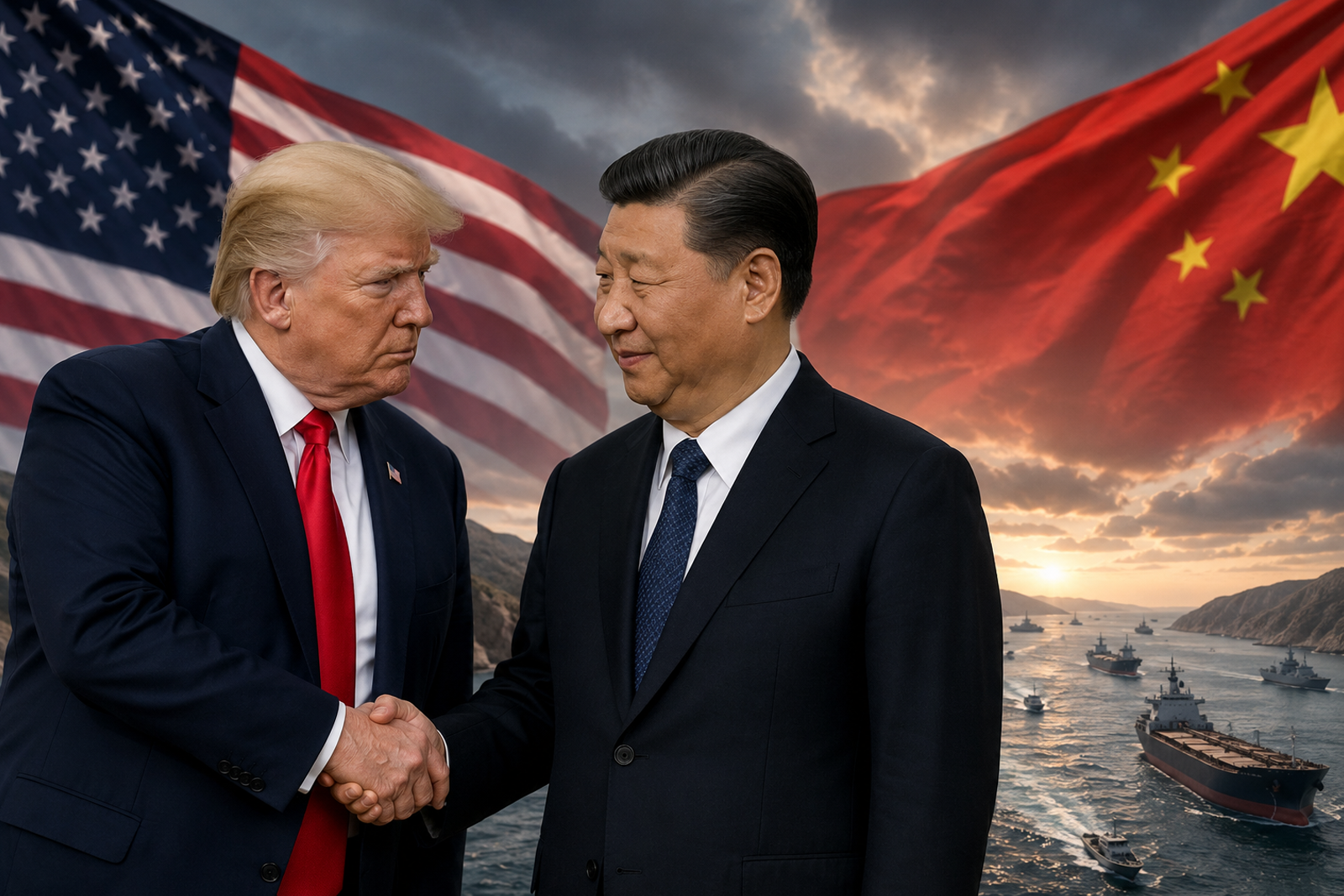
In a development that could influence global geopolitics, former U.S. President Donald Trump stated that Chinese President Xi Jinping had assured him that China would not provide military support to Iran. According to Trump, Xi also expressed willingness to help reopen the strategically critical Strait of Hormuz, a vital maritime corridor for global oil shipments.
The Strait of Hormuz, located between the Persian Gulf and the Gulf of Oman, plays a crucial role in the transportation of nearly one-fifth of the world’s oil supply. Any disruption in this narrow waterway can send shockwaves through international energy markets. Trump’s statement comes at a time when tensions in the Middle East remain fragile, particularly involving Iran’s relations with Western nations.
Trump emphasized that China’s stance could contribute to easing fears of escalation in the region. By refraining from arming Iran, China may be positioning itself as a stabilizing force rather than an active participant in regional conflicts. This approach could also reflect Beijing’s broader interest in safeguarding trade routes and maintaining steady energy imports, given its heavy reliance on Middle Eastern oil.
Furthermore, the suggestion that China could assist in reopening the Strait of Hormuz highlights a potential shift in diplomatic dynamics. Traditionally, the United States has played a dominant role in ensuring maritime security in the region. China’s involvement, if realized, may indicate a more multipolar approach to global security, where major powers share responsibility in maintaining critical infrastructure and trade routes.
However, Trump’s remarks have yet to be officially confirmed by Chinese authorities, leaving room for speculation about the depth and authenticity of such assurances. Analysts suggest that even if informal discussions took place, geopolitical realities could complicate any direct cooperation between China and the United States on such sensitive issues.
As global attention turns to the Strait of Hormuz and its stability, Trump’s claims add a new layer to the ongoing narrative of international diplomacy. Whether these assurances translate into concrete actions remains to be seen, but the implications for global trade, energy security, and regional peace are undeniably significant.
Former U.S. President Donald Trump has ignited fresh geopolitical discussion by claiming that Chinese President Xi Jinping assured him China would not arm Iran and was open to helping restore operations in the Strait of Hormuz. The statement, though not officially confirmed by Beijing, has stirred conversations across diplomatic and strategic circles about its potential implications for global stability.
The Strait of Hormuz is one of the most critical maritime chokepoints in the world. Positioned between the Persian Gulf and the Gulf of Oman, it serves as a gateway for a significant portion of global oil exports.
Given its importance, even minor tensions in the region can trigger widespread economic consequences.
Trump’s assertion that China could help reopen or secure the Strait suggests a possible expansion of Beijing’s role in Middle Eastern geopolitics.
If China steps in as a mediator or facilitator, it could redefine traditional power dynamics that have long been dominated by Western nations.
One of the most significant aspects of Trump’s claim is the assurance that China would refrain from supplying weapons to Iran.
Such a stance, if accurate, could help de-escalate tensions and prevent further complications in an already volatile region.
The idea of China assisting in maintaining the Strait of Hormuz raises questions about the evolving relationship between Washington and Beijing.
This development highlights the growing complexity of global governance, where multiple powers must navigate cooperation and rivalry simultaneously.
Despite the significance of Trump’s remarks, there has been no official confirmation from Chinese authorities.
The absence of verification means the global community must treat the claims as part of a broader political narrative rather than confirmed policy.
If such assurances are indeed genuine and lead to action, the ripple effects could be substantial.
Energy markets, in particular, would benefit from any reduction in uncertainty surrounding the Strait of Hormuz.
Trump’s claim about Xi Jinping offers a glimpse into the complex and evolving nature of international diplomacy. Whether it reflects actual policy discussions or political rhetoric, the idea of China playing a stabilizing role while avoiding military entanglement with Iran is significant.
As the world watches closely, the focus will remain on whether these words translate into tangible diplomatic or strategic actions. In a time of shifting global power structures, even unconfirmed statements can influence perceptions, negotiations, and the future course of international relations.

In today’s world of endless choices and digital noise, marketing is no longer just about promoting products — it’s about creating meaningful connections. Successful brands focus on building relationships rather than chasing transactions. Marketing that connects transforms audiences into loyal communities by earning their trust, understanding their needs, and delivering genuine value. When businesses prioritize people over promotions, marketing becomes more than strategy — it becomes a relationship built to last.
Odisha’s small businesses are entering a new era — where mobile apps, online payments, and e-commerce aren’t luxuries, but lifelines for growth and survival.

As India enters the second phase of its digital revolution, artificial intelligence and automation are not just transforming industries—they’re redefining what it means to work, earn, and adapt.

The conference brought together officials from ten central districts, including district collectors, tehsildars, registrars, and welfare officers, either virtually or in person.

We glorified sleepless nights, burnout, and exhaustion as signs of ambition. But when did working yourself to the edge become the definition of success?

Not everyone who thrives in tech writes code. Some design the very experiences that make technology human.





Leave Comments