- Loading...
- Loading...


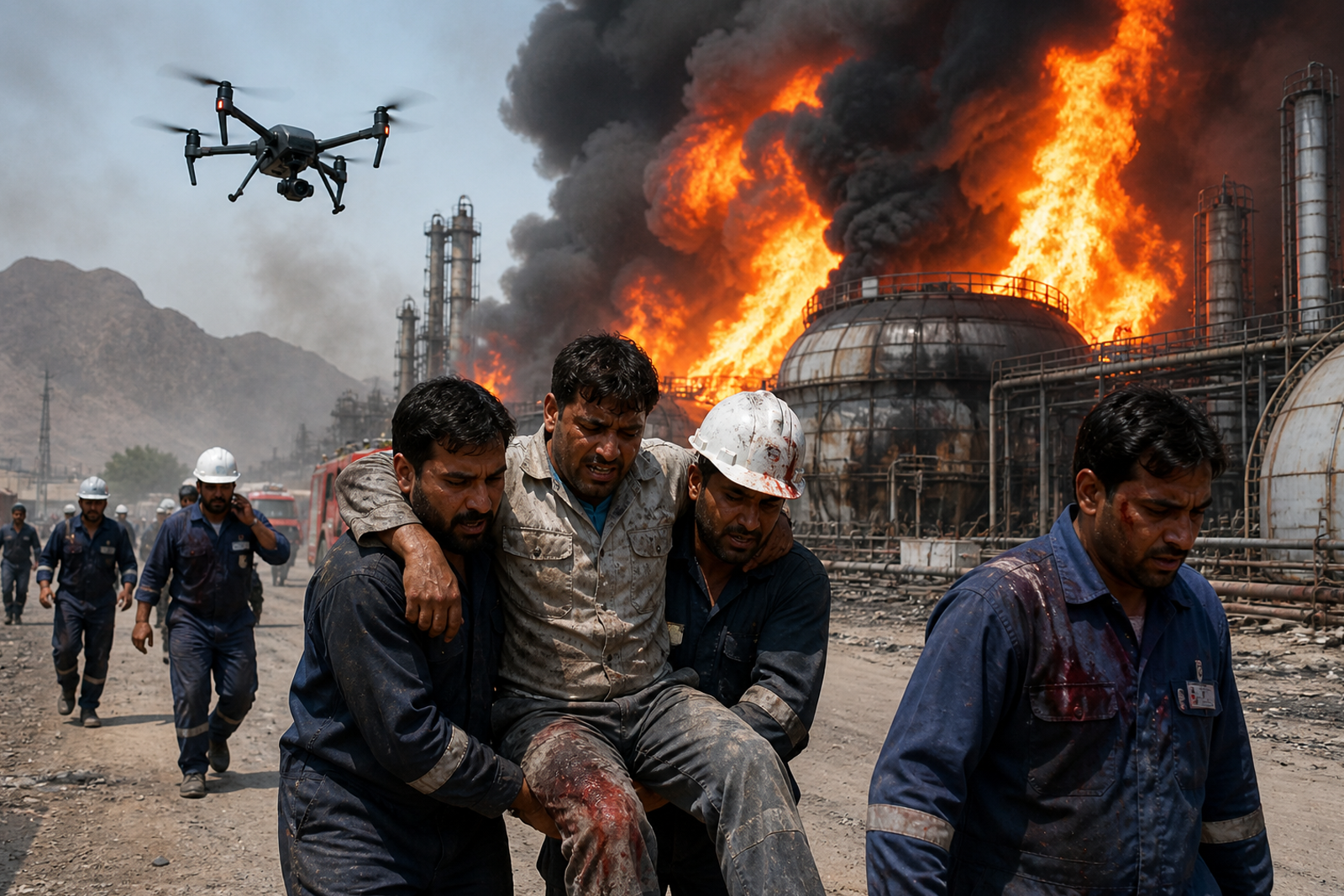
A sudden drone strike on a key oil storage facility in Fujairah, one of the United Arab Emirates’ critical energy hubs, has heightened concerns over security in the Middle East. The attack triggered a massive blaze that sent thick plumes of smoke into the sky, alarming nearby residents and workers. Authorities confirmed that three Indian nationals were injured in the incident and were immediately rushed to medical facilities for treatment. Their condition is reported to be stable.
Fujairah plays a vital role in global energy logistics due to its strategic location along the Gulf of Oman, outside the Strait of Hormuz. The emirate houses major oil terminals and serves as a key refueling and storage point for international shipments. Any disruption in this region has the potential to impact global oil supply chains and raise concerns among international markets.
Emergency response teams acted swiftly to contain the fire, deploying firefighting units and safety personnel to prevent further damage. While the blaze was brought under control after several hours, investigations are ongoing to assess the full extent of the damage and confirm the source of the drone involved in the attack. Security agencies have heightened surveillance across critical infrastructure sites in the UAE following the incident.
The attack comes at a time of escalating tensions across the Middle East, where geopolitical rivalries and conflicts have increasingly spilled over into strategic and economic targets. Experts warn that such incidents could further destabilize the region, especially when vital assets like oil storage facilities are targeted.
The Indian Embassy in the UAE is closely monitoring the situation and has extended support to the injured nationals. Officials have also urged Indian citizens in the region to remain vigilant and follow local safety advisories.
As investigations continue, the incident underscores the vulnerability of critical infrastructure in conflict-prone regions. It also raises broader questions about the growing use of drone technology in modern warfare and its implications for global security and energy stability.
A drone strike targeting a major oil storage zone in Fujairah, United Arab Emirates, has once again drawn global attention to the fragile security environment in the Middle East. The attack, which sparked a large fire and injured three Indian nationals, highlights the increasing risks faced by critical infrastructure in geopolitically sensitive regions. As authorities investigate the origins and intent behind the strike, the incident is being viewed as part of a broader pattern of rising tensions and asymmetric threats across the region.
The incident unfolded when a suspected unmanned aerial vehicle struck a fuel storage area in Fujairah, triggering an intense fire. Thick black smoke quickly filled the skyline, visible from miles away. Emergency services responded promptly, dispatching firefighting units and crisis management teams to contain the blaze.
Officials confirmed that three Indian workers present at the site sustained injuries. They were immediately provided medical assistance and transported to nearby hospitals. Reports indicate that their injuries are not life-threatening, but the incident has understandably caused concern among the expatriate community.
Authorities have not yet publicly identified those responsible for the attack. However, the use of drone technology suggests a calculated attempt to target vital economic infrastructure with minimal direct engagement.
Fujairah is not just another industrial zone—it is a cornerstone of global energy logistics. Located on the eastern coast of the UAE along the Gulf of Oman, it offers a critical advantage: direct access to international shipping routes without passing through the Strait of Hormuz, a chokepoint often affected by geopolitical tensions.
Key reasons for its importance include:
Any disruption here can ripple through global markets, affecting oil prices and supply chains.
The Fujairah attack reflects a growing trend in modern conflict—reliance on drones to conduct precision strikes. These devices are relatively inexpensive, difficult to detect, and capable of causing significant damage.
Key concerns linked to drone warfare:
Security analysts warn that such tactics could become more frequent, especially in regions with ongoing geopolitical rivalries.
The injury of three Indian workers has drawn attention to the large expatriate workforce in the UAE, particularly in industrial sectors like oil and construction. India has a significant presence in the region, with millions of citizens contributing to various industries.
Key points regarding the Indian community:
The incident serves as a reminder of the vulnerabilities faced by migrant workers in volatile regions.
The Middle East has been experiencing heightened tensions due to ongoing conflicts, rivalries, and shifting alliances. Incidents like the Fujairah drone strike add another layer of complexity to an already unstable environment.
Broader implications include:
Experts believe that unless there is a coordinated effort to de-escalate tensions, such attacks could become more frequent.
UAE authorities acted swiftly to contain the fire and secure the affected area. Emergency protocols were activated immediately, ensuring that the situation did not spiral out of control.
Response highlights:
The efficient response helped minimize casualties and infrastructure damage.
The Fujairah incident underscores the urgent need for enhanced security measures to protect critical infrastructure. As technology evolves, so do the methods used in modern conflicts.
Future considerations include:
The attack serves as a wake-up call for nations and industries alike to adapt to emerging threats.
The drone strike on Fujairah’s oil facility is more than an isolated incident—it is a reflection of shifting dynamics in modern warfare and regional politics. With three Indian nationals injured and a key energy hub temporarily disrupted, the event highlights both human and economic vulnerabilities.
As investigations continue and tensions simmer, the focus now shifts to prevention, preparedness, and international collaboration. In a world increasingly shaped by technology-driven conflict, safeguarding critical infrastructure has become more important than ever.

In today’s world of endless choices and digital noise, marketing is no longer just about promoting products — it’s about creating meaningful connections. Successful brands focus on building relationships rather than chasing transactions. Marketing that connects transforms audiences into loyal communities by earning their trust, understanding their needs, and delivering genuine value. When businesses prioritize people over promotions, marketing becomes more than strategy — it becomes a relationship built to last.

Odisha’s small businesses are entering a new era — where mobile apps, online payments, and e-commerce aren’t luxuries, but lifelines for growth and survival.

As India enters the second phase of its digital revolution, artificial intelligence and automation are not just transforming industries—they’re redefining what it means to work, earn, and adapt.

The conference brought together officials from ten central districts, including district collectors, tehsildars, registrars, and welfare officers, either virtually or in person.

We glorified sleepless nights, burnout, and exhaustion as signs of ambition. But when did working yourself to the edge become the definition of success?

Not everyone who thrives in tech writes code. Some design the very experiences that make technology human.









Leave Comments