- Loading...
- Loading...


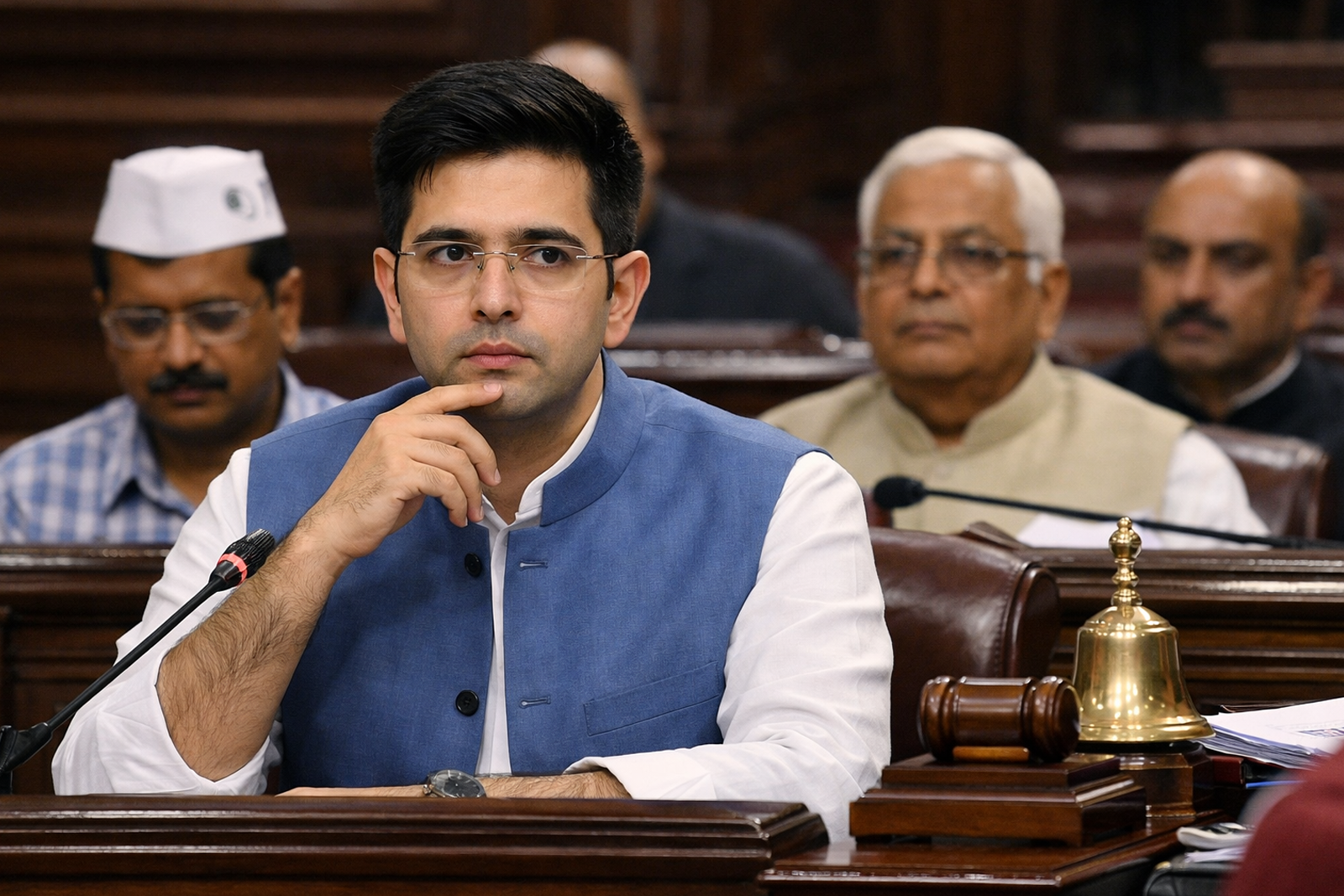
In a significant political development, the Aam Aadmi Party (AAP) has formally approached the Rajya Sabha to remove Raghav Chadha from his position as the party’s deputy leader. The move has sparked discussions across political circles, raising questions about internal dynamics and strategic shifts within the party.
While the party has not publicly detailed the reasons behind this decision, such a step often indicates internal restructuring or a recalibration of leadership roles. Raghav Chadha, known for his articulate presence in Parliament and active participation in debates, has been a prominent face of AAP at the national level. His potential removal from a key parliamentary position suggests that the party may be planning to redistribute responsibilities or introduce new leadership voices.
This development could influence AAP’s functioning in the Rajya Sabha, where coordination and representation play a crucial role in legislative discussions. A change in deputy leadership may alter how the party presents its stance on major issues and engages with other political parties. It also highlights the evolving nature of party structures in response to political challenges and priorities.
The decision comes at a time when political parties across India are reassessing their strategies ahead of upcoming electoral battles. Moves like these often reflect efforts to strengthen organizational efficiency and maintain a competitive edge. Observers will be closely watching how AAP navigates this transition and what it means for its future political positioning.
Overall, the development underscores the dynamic nature of Indian politics, where leadership roles and party strategies continue to evolve in response to changing circumstances.
In a notable political move, the Aam Aadmi Party (AAP) has written to the Rajya Sabha requesting the removal of Raghav Chadha from his role as the party’s deputy leader. The development has triggered widespread attention, as it signals a possible shift in the party’s internal structure and parliamentary strategy. While no official explanation has been made public, the decision is being closely analyzed for its political implications.
Raghav Chadha has been one of the most visible and vocal representatives of AAP in the Rajya Sabha. Known for his strong communication skills and active participation in debates, he has played a key role in presenting the party’s stance on national issues. His position as deputy leader was crucial in coordinating party members and contributing to legislative discussions.
The party’s request to remove him from this role indicates that a change is underway. Such moves are not uncommon in parliamentary politics, where parties periodically reassess leadership roles to adapt to evolving priorities.
Although the exact cause remains undisclosed, several possible factors may have contributed to AAP’s decision:
The removal of a deputy leader can have both immediate and long-term effects on how a party operates within the Rajya Sabha:
Despite this development, Raghav Chadha remains an important figure within AAP. Over the years, he has built a reputation as a young and articulate leader, often representing the party in high-profile debates and discussions.
Therefore, his removal from the deputy leader position does not necessarily indicate a decline in his political relevance. Instead, it may simply reflect a change in role or responsibility.
This move comes at a time when political parties across India are increasingly focused on organizational efficiency and electoral preparedness. With upcoming elections and shifting political alliances, parties are making calculated decisions to strengthen their internal structures.
In this context, AAP’s decision can be seen as part of a broader trend of proactive political management.
While official statements remain limited, the development has sparked discussions among political observers and analysts:
Until the party provides a detailed explanation, these interpretations will remain speculative.
The coming weeks will be crucial in determining how this decision shapes AAP’s future course:
The request by the Aam Aadmi Party to remove Raghav Chadha as deputy leader in the Rajya Sabha marks an important moment in the party’s political journey. Whether it is driven by internal restructuring, strategic recalibration, or broader political considerations, the move highlights the dynamic nature of party politics in India.As the situation unfolds, all eyes will be on how AAP manages this transition and what it means for its leadership structure and parliamentary strategy.

In today’s world of endless choices and digital noise, marketing is no longer just about promoting products — it’s about creating meaningful connections. Successful brands focus on building relationships rather than chasing transactions. Marketing that connects transforms audiences into loyal communities by earning their trust, understanding their needs, and delivering genuine value. When businesses prioritize people over promotions, marketing becomes more than strategy — it becomes a relationship built to last.

Odisha’s small businesses are entering a new era — where mobile apps, online payments, and e-commerce aren’t luxuries, but lifelines for growth and survival.

As India enters the second phase of its digital revolution, artificial intelligence and automation are not just transforming industries—they’re redefining what it means to work, earn, and adapt.

The conference brought together officials from ten central districts, including district collectors, tehsildars, registrars, and welfare officers, either virtually or in person.

We glorified sleepless nights, burnout, and exhaustion as signs of ambition. But when did working yourself to the edge become the definition of success?

Not everyone who thrives in tech writes code. Some design the very experiences that make technology human.






Leave Comments