- Loading...
- Loading...


Intro:
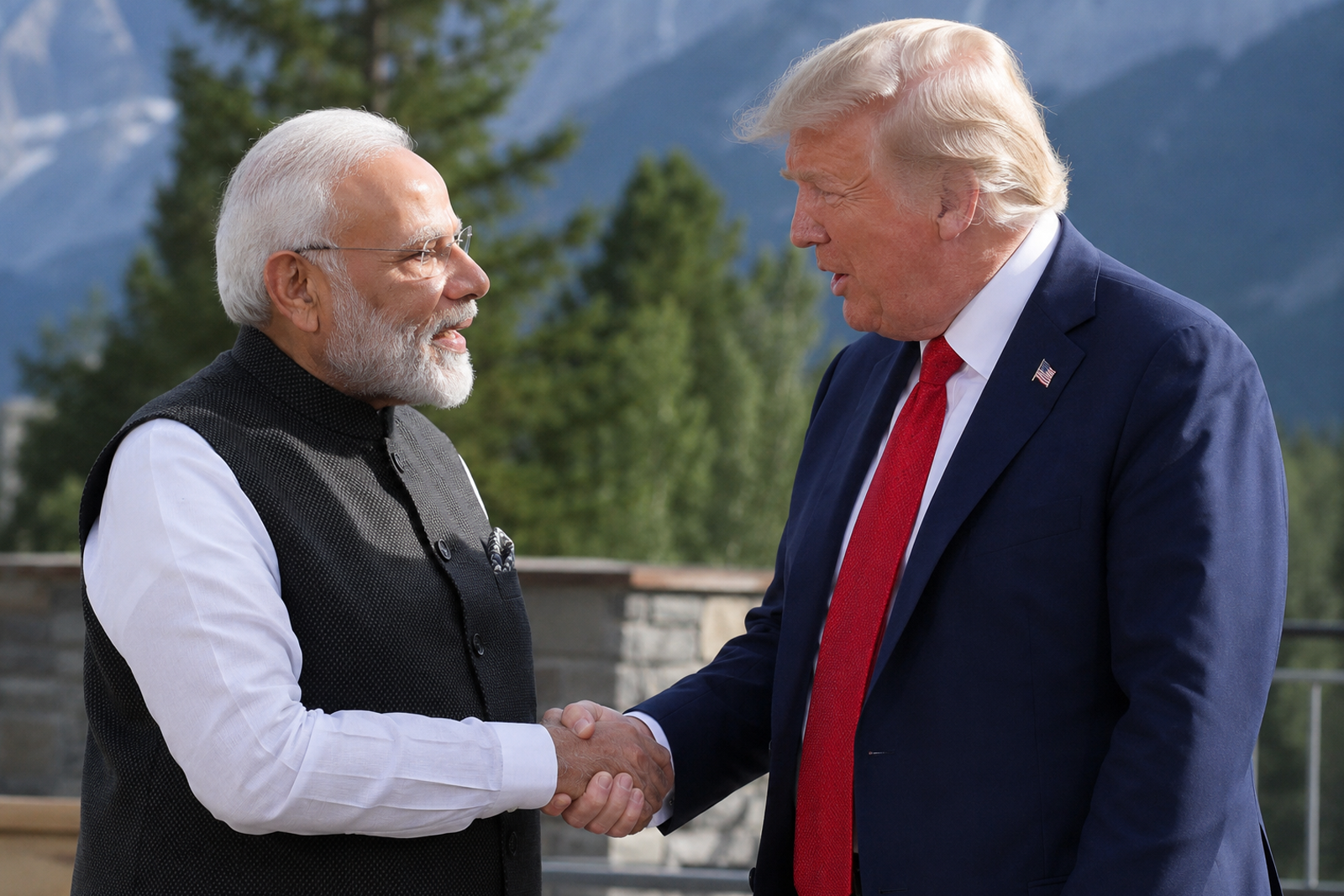
A brief but significant interaction between Prime Minister Narendra Modi and U.S. President Donald Trump at the G7 Summit has attracted global attention. The exchange of greetings, witnessed by world leaders and diplomats, comes at a time when both nations are looking to deepen cooperation across several strategic sectors. The meeting has raised expectations for broader discussions on trade, technology, defense, and global stability.
The cordial greeting between the two leaders underscored the strong diplomatic ties that have developed between India and the United States over the years. While the interaction was brief, it reflected mutual respect and the importance both countries place on maintaining a constructive partnership.
Observers noted that such moments often carry diplomatic significance, especially during major international gatherings where leaders have the opportunity to discuss shared interests and emerging global challenges.
India and the United States have steadily expanded cooperation in areas ranging from defense and security to innovation and clean energy. Any future talks between Modi and Trump are expected to focus on strengthening these partnerships while exploring new avenues of collaboration.
The two countries have increasingly worked together on issues related to regional security, supply chain resilience, and technological advancement. Continued engagement is expected to support economic growth and stability in both nations.
Trade remains one of the most important pillars of India-U.S. relations. Business communities in both countries are closely watching developments from the summit, hoping for measures that could further enhance investment opportunities and commercial cooperation.
Experts believe discussions may include market access, digital trade, manufacturing partnerships, and efforts to strengthen economic ties amid evolving global conditions.
The G7 Summit is taking place against a backdrop of geopolitical tensions, economic uncertainty, and climate concerns. As influential global players, India and the United States are expected to exchange views on international security, sustainable development, and the future of global governance.
India’s growing role on the world stage and its voice on behalf of developing nations make its engagement with major powers particularly significant.
The warm exchange between Prime Minister Modi and President Trump has generated optimism about the future direction of India-U.S. relations. While formal discussions are anticipated, the greeting itself highlighted the importance of continued dialogue and cooperation between two of the world’s most influential democracies.
As the G7 Summit progresses, global attention will remain focused on how both leaders translate diplomatic goodwill into meaningful outcomes for their countries and the international community.
A brief exchange of greetings between Prime Minister Narendra Modi and United States President Donald Trump at the G7 Summit has become one of the most discussed diplomatic moments of the gathering. While the interaction lasted only a short time, it carried considerable symbolic value, reflecting the importance of the relationship between India and the United States in an increasingly complex global environment.
As world leaders assembled to deliberate on pressing international issues, the friendly interaction between Modi and Trump highlighted the growing relevance of India-US cooperation in areas ranging from economic development and trade to technology, security, and global governance. Political observers and diplomatic experts view the meeting as a positive sign ahead of possible bilateral discussions during the summit.
International summits often provide opportunities for leaders to engage in both formal and informal conversations. The exchange of greetings between Modi and Trump stood out because of the strategic importance of their respective nations.
Such moments may appear ceremonial, but they frequently indicate the willingness of countries to maintain constructive engagement. The interaction demonstrated that communication channels remain open and that both sides recognize the value of continued dialogue.
For India and the United States, whose partnership has expanded significantly over the last two decades, even a brief greeting can send a strong message about diplomatic continuity and mutual respect.
The G7 Summit remains one of the world's most influential forums for discussing economic and geopolitical issues. Although India is not a permanent member of the group, its participation as a guest nation reflects its growing influence in international affairs.
India's presence at the summit underscores its role as a major voice representing emerging economies and developing nations.
Over the years, India and the United States have transformed their relationship into one of the most significant strategic partnerships in the world.
India and the United States have expanded defense collaboration through joint military exercises, intelligence sharing, and defense technology cooperation.
Key areas include:
The strategic partnership has strengthened regional stability and enhanced both nations' security capabilities.
Technology has become a cornerstone of bilateral cooperation.
Areas of collaboration include:
Both nations recognize that technological leadership will play a crucial role in shaping future economic growth.
Trade and investment continue to be central pillars of India-US relations.
The United States is one of India's largest trading partners, while India represents an increasingly important market for American businesses.
Business leaders from both countries are optimistic that stronger economic engagement can create jobs, increase innovation, and stimulate long-term growth.
One of the most significant areas of cooperation between India and the United States is the Indo-Pacific region.
Both countries support a free, open, and rules-based Indo-Pacific that promotes:
The region has become increasingly important due to its role in global commerce and security dynamics.
India's strategic location and growing economic strength make it a key partner in ensuring stability across the Indo-Pacific landscape.
The world is currently facing multiple challenges that no nation can address alone.
Countries are working together to reduce emissions, accelerate clean energy adoption, and build sustainable economies.
India and the United States have cooperated on:
Discussions between leaders are expected to explore:
Many economies continue to face inflationary pressures and market uncertainty.
Strengthened cooperation between major economies can help:
Prime Minister Modi has consistently emphasized the concerns of developing countries on international platforms.
India has emerged as an important advocate for what is often referred to as the Global South—a group of nations seeking greater representation in global decision-making.
At forums like the G7 Summit, India often serves as a bridge between developed and developing economies, helping to foster broader international consensus.
Diplomacy is often built through a combination of formal negotiations and symbolic interactions.
The Modi-Trump greeting may appear simple, but it carries broader significance because it:
Such interactions contribute to the overall atmosphere in which important policy discussions take place.
Analysts believe that any future bilateral talks between Modi and Trump could focus on several high-priority areas.
These discussions could help define the next phase of cooperation between the two nations.
The exchange of greetings between Prime Minister Narendra Modi and President Donald Trump at the G7 Summit may have been brief, but its diplomatic significance is considerable. It reflected the enduring importance of India-US relations and generated optimism about future engagement on critical global issues.
As the summit continues, attention will remain focused on how both leaders translate diplomatic goodwill into practical cooperation. With shared interests in economic growth, technological advancement, regional stability, and global development, India and the United States are well-positioned to strengthen their partnership further.
The Modi-Trump interaction serves as a reminder that in international diplomacy, even a simple greeting can signal the beginning of meaningful conversations that shape global affairs.

In today’s world of endless choices and digital noise, marketing is no longer just about promoting products — it’s about creating meaningful connections. Successful brands focus on building relationships rather than chasing transactions. Marketing that connects transforms audiences into loyal communities by earning their trust, understanding their needs, and delivering genuine value. When businesses prioritize people over promotions, marketing becomes more than strategy — it becomes a relationship built to last.
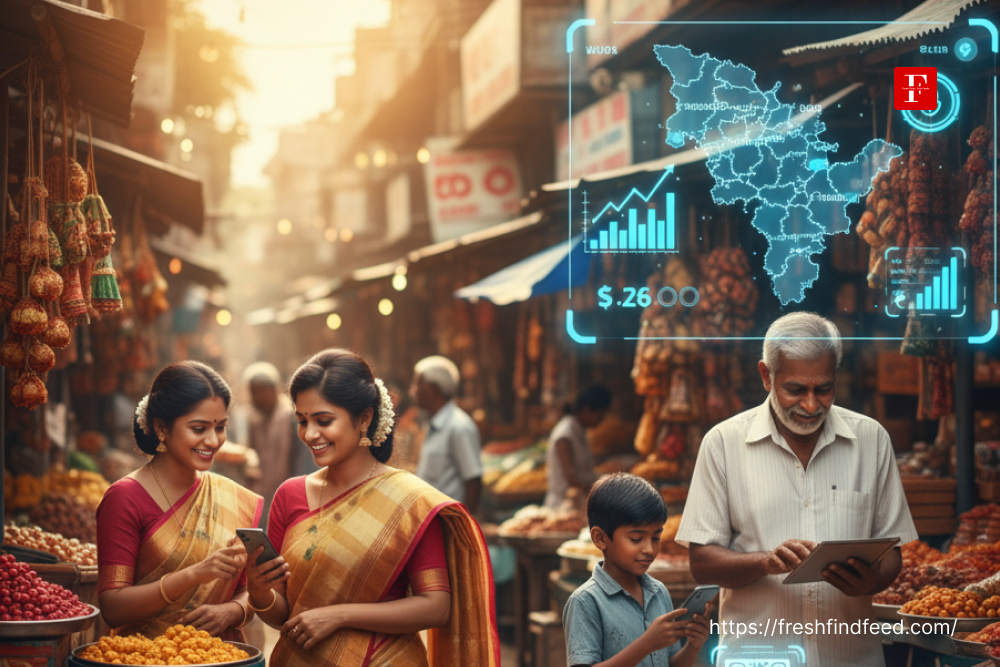
Odisha’s small businesses are entering a new era — where mobile apps, online payments, and e-commerce aren’t luxuries, but lifelines for growth and survival.

As India enters the second phase of its digital revolution, artificial intelligence and automation are not just transforming industries—they’re redefining what it means to work, earn, and adapt.

The conference brought together officials from ten central districts, including district collectors, tehsildars, registrars, and welfare officers, either virtually or in person.

We glorified sleepless nights, burnout, and exhaustion as signs of ambition. But when did working yourself to the edge become the definition of success?

Not everyone who thrives in tech writes code. Some design the very experiences that make technology human.

Leave Comments