- Loading...
- Loading...


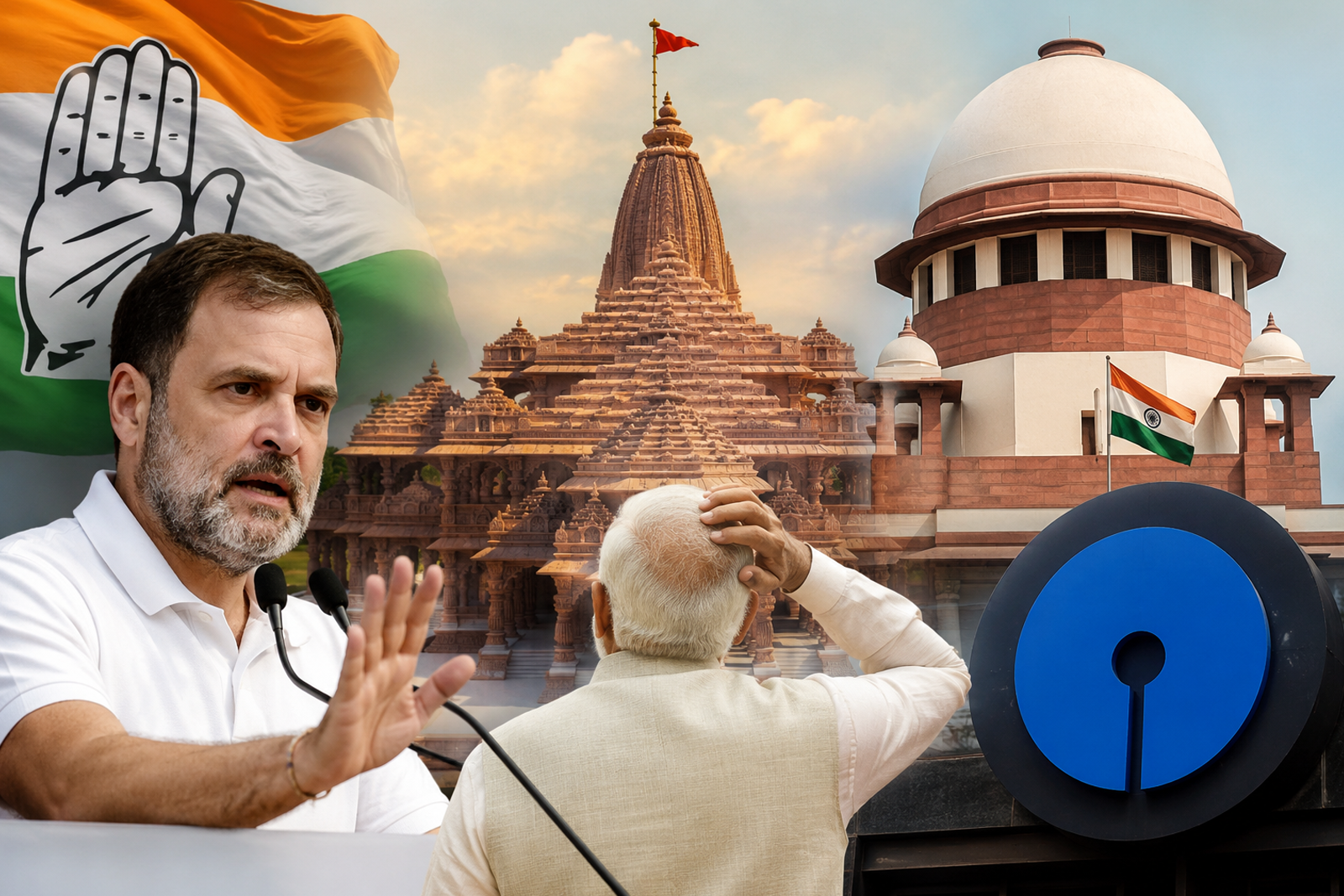
The Congress has launched a fresh political attack on the Central government over the controversy surrounding the Ram Temple donation centre. The opposition party claims that the State Bank of India (SBI), which manages aspects of the temple's donation collection process, had reportedly recommended the removal of certain staff members nearly three months before recent allegations surfaced. The party has demanded an explanation for the delay, asking who was responsible for protecting the employees despite the reported warning.
Addressing the issue, Congress leaders argued that if SBI had already flagged concerns regarding the functioning of the donation centre staff, immediate action should have followed. Instead, the party alleges that the recommendation was ignored, allowing the same employees to continue handling public donations.
According to Congress, the delay raises serious questions about transparency and administrative accountability. The party has urged the authorities to disclose the timeline of events, including when the recommendation was received and why it was not acted upon sooner.
The Ram Temple donation centre plays a significant role in managing financial contributions from devotees visiting Ayodhya. Given the large volume of donations received every day, any allegation involving the handling of funds naturally attracts public attention.
While the controversy has become a political issue, officials associated with the temple administration are expected to review the matter carefully. Any findings from internal inquiries could help clarify whether established procedures were followed and whether administrative lapses occurred.
The issue has sparked a fresh exchange between the ruling party and the opposition. Congress maintains that institutions responsible for managing public and religious funds must operate with complete transparency. The party believes that any prior warning from a major banking institution should have been treated with urgency.
Meanwhile, supporters of the government have dismissed the allegations as politically motivated and have called for waiting until all facts are officially verified before drawing conclusions.
The controversy is likely to remain in focus as political leaders continue demanding answers. Investigations or official statements from the concerned authorities may provide greater clarity on whether SBI had indeed recommended staff changes and how those recommendations were handled.
As public interest in the Ram Temple remains exceptionally high, the outcome of the issue could influence both administrative reforms and political debate in the coming weeks.
The Congress has framed the controversy as a question of accountability, arguing that warnings should never be ignored when public trust is involved. Whether the allegations lead to further investigations or policy changes will depend on the findings of the authorities. Until then, the debate over transparency, responsibility, and governance at the Ram Temple donation centre is expected to continue.
A fresh political controversy has emerged over the administration of the Ram Temple donation centre in Ayodhya after the Congress alleged that the State Bank of India (SBI) had recommended the removal of certain staff members nearly three months before recent concerns came to light. The opposition party has accused the authorities of ignoring an important warning and has demanded to know why timely action was not taken.
The allegations have triggered a wider debate on accountability, transparency, and the management of donations made by millions of devotees. While the ruling establishment has not accepted the Congress' claims, the issue has quickly gained national attention due to the significance of the Ram Temple and the public trust associated with its financial operations.
According to Congress leaders, SBI had reportedly raised concerns regarding some employees working at the Ram Temple donation centre several months ago. The party claims that the bank recommended replacing or removing the staff after identifying issues related to the functioning of the donation collection process.
Despite this alleged recommendation, Congress argues that the employees continued in their roles, leading the opposition to question whether someone within the administration deliberately delayed action.
The central question raised by the party is straightforward: if a warning existed, why was it not acted upon immediately?
Congress has made the issue one of administrative responsibility rather than merely political criticism. Party leaders have asked the authorities to make the complete sequence of events public.
Among the key questions raised are:
The party argues that answers to these questions are essential to maintaining public confidence in institutions managing religious donations.
The Ram Temple in Ayodhya attracts millions of pilgrims from across India and abroad. Every day, devotees contribute donations in the form of cash, digital payments, jewellery, and other offerings.
The donation centre serves as the primary location where these contributions are collected, recorded, and processed before reaching the temple trust.
Because the centre handles significant financial contributions, its operations are expected to follow strict administrative procedures that ensure:
Any controversy involving its functioning naturally attracts widespread public attention.
The State Bank of India has experience managing large-scale financial transactions for major institutions across the country. If reports suggesting that SBI advised administrative changes are accurate, the recommendation would likely have been based on operational observations rather than political considerations.
Banks working with institutions handling large public donations generally recommend improvements whenever they notice procedural weaknesses or operational concerns.
Such recommendations may involve:
Congress argues that ignoring such advice could weaken public confidence in the system.
The controversy has led to sharp exchanges between political parties.
Congress maintains that transparency should apply equally to every public institution, particularly those handling donations made by citizens in good faith.
According to opposition leaders, accountability becomes even more important when religious institutions receive contributions from millions of people who expect proper financial management.
Supporters of the ruling establishment, however, have dismissed the allegations as politically motivated. They argue that conclusions should not be drawn until official investigations or statements clarify the facts.
Beyond the immediate controversy, the incident has renewed discussions about governance standards for institutions handling public donations.
Many observers believe that transparency can be strengthened through measures such as:
Experts note that greater openness helps build trust among devotees while reducing the scope for misunderstandings or allegations.
For millions of devotees, contributions made to the Ram Temple represent both faith and personal devotion. This makes efficient management of donations especially important.
Any suggestion of administrative lapses—whether ultimately proven or not—can create uncertainty among donors.
Therefore, many believe that authorities should respond quickly to concerns by:
Such steps can help reassure the public that established procedures are being followed.
If authorities examine the matter further, several outcomes are possible:
Officials may review records to determine whether SBI submitted recommendations and how they were handled.
The temple administration could issue a detailed statement explaining the sequence of events and administrative decisions.
SBI or associated officials may clarify the nature of any communication or recommendation, if appropriate.
Even if no wrongdoing is established, authorities could introduce stronger operational safeguards to improve future functioning.
The Ram Temple is one of India's most prominent religious landmarks, drawing visitors from every state and from overseas. As a result, any issue connected to its administration quickly becomes a matter of national discussion.
The controversy also highlights broader questions about how large religious institutions manage public funds and maintain accountability. Regardless of political perspectives, there is widespread agreement that systems handling substantial donations should be transparent, secure, and professionally managed.
The debate is expected to continue until authorities provide greater clarity regarding the alleged SBI recommendation and the decisions taken thereafter.
If official records confirm that recommendations were made, attention may shift toward understanding why implementation was delayed. Conversely, if the allegations are found to be inaccurate or incomplete, official clarification could help resolve the controversy.
In either case, the issue underscores the importance of timely communication and robust governance in institutions that handle public trust and financial contributions.
The Congress has turned the alleged delay in acting on SBI's recommendation into a major political issue, questioning whether administrative accountability was compromised at the Ram Temple donation centre. While the facts surrounding the reported warning are yet to be fully established through official clarification, the controversy has highlighted the need for transparent management of religious donations.
As authorities, financial institutions, and political leaders respond, the focus is likely to remain on ensuring that public confidence is protected through clear procedures, responsible governance, and timely action whenever concerns are raised.

In today’s world of endless choices and digital noise, marketing is no longer just about promoting products — it’s about creating meaningful connections. Successful brands focus on building relationships rather than chasing transactions. Marketing that connects transforms audiences into loyal communities by earning their trust, understanding their needs, and delivering genuine value. When businesses prioritize people over promotions, marketing becomes more than strategy — it becomes a relationship built to last.

Odisha’s small businesses are entering a new era — where mobile apps, online payments, and e-commerce aren’t luxuries, but lifelines for growth and survival.

As India enters the second phase of its digital revolution, artificial intelligence and automation are not just transforming industries—they’re redefining what it means to work, earn, and adapt.

The conference brought together officials from ten central districts, including district collectors, tehsildars, registrars, and welfare officers, either virtually or in person.

We glorified sleepless nights, burnout, and exhaustion as signs of ambition. But when did working yourself to the edge become the definition of success?

Not everyone who thrives in tech writes code. Some design the very experiences that make technology human.





Leave Comments