- Loading...
- Loading...


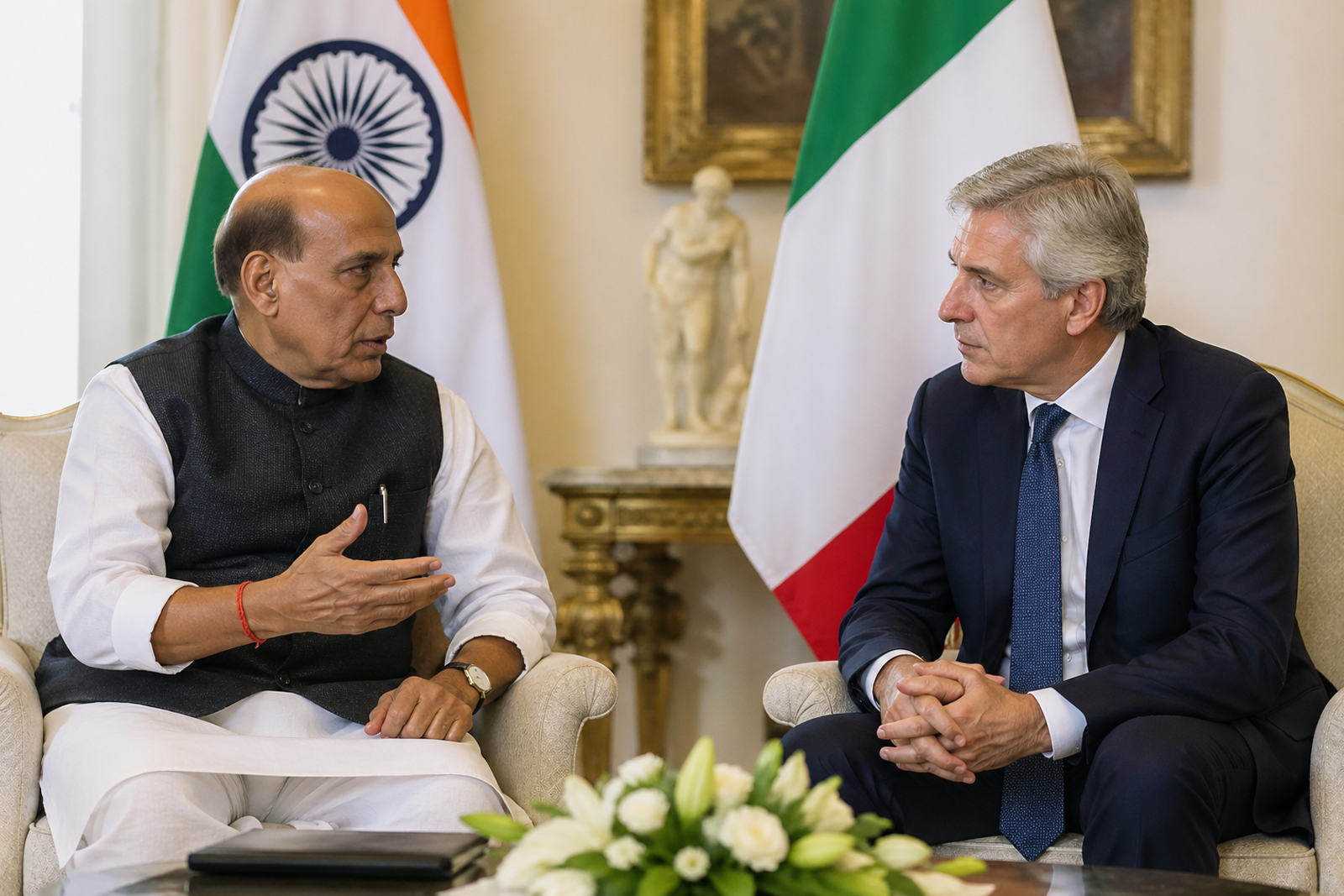
India has taken a firm diplomatic stance as Defence Minister Rajnath Singh urged Italy to avoid transferring sensitive defence technology to Pakistan. The appeal reflects New Delhi’s growing concern over regional security dynamics and the potential risks associated with advanced military collaboration involving its western neighbour.
During high-level discussions, Singh highlighted that the transfer of critical defence technology could alter the strategic balance in South Asia. India has consistently maintained that any enhancement of Pakistan’s military capabilities through external support may escalate tensions in an already sensitive region. The request to Italy is part of a broader diplomatic effort to ensure that global defence partnerships remain responsible and transparent.
India’s position is rooted in its emphasis on maintaining peace and stability. By reaching out to Italy, a key European defence player, New Delhi is signalling its expectation that partners consider regional implications before entering into military agreements. The move also reflects India’s proactive foreign policy approach, where security concerns are communicated directly to influential nations.
Italy has been expanding its defence outreach globally, including potential collaborations with Pakistan. While such partnerships are often driven by economic and strategic interests, India views them through the lens of regional security. Any transfer of advanced systems or technology could have long-term consequences, especially in areas such as surveillance, weapons systems, and defence infrastructure.
South Asia remains one of the most geopolitically sensitive regions in the world. Relations between India and Pakistan have historically been complex, with periodic tensions along borders and differing strategic priorities. In this context, India’s caution against defence technology sharing is aimed at preventing any developments that could destabilize the balance of power.
India’s message underscores the importance of responsible defence cooperation in a globally interconnected security environment. By urging Italy to reconsider its engagement with Pakistan in this domain, New Delhi is advocating for a more cautious and stability-oriented approach.
As global defence ties continue to evolve, India’s intervention highlights its commitment to safeguarding national interests while promoting long-term peace in the region.
India has sharpened its diplomatic messaging on global defence cooperation, with Defence Minister Rajnath Singh urging Italy to exercise caution in sharing sensitive defence technology with Pakistan. The appeal reflects New Delhi’s broader concern about maintaining strategic equilibrium in South Asia, a region where security dynamics are deeply intertwined with international partnerships.
At a time when global defence collaborations are expanding rapidly, India’s intervention signals that such agreements are not merely bilateral transactions but carry wider geopolitical implications. By voicing its concerns directly, India aims to ensure that its security environment is not adversely impacted by external military cooperation.
Defence technology is no longer limited to conventional weapons. It now includes advanced systems such as cyber capabilities, surveillance tools, artificial intelligence in warfare, and precision-guided equipment. Any transfer of such technologies can significantly enhance a nation’s military strength.
For India, the concern lies in how these advancements could be used in a region already marked by historical tensions. Even limited cooperation in niche defence areas can translate into long-term strategic advantages on the battlefield.
Moreover, technological collaboration often leads to deeper military ties, including joint training, intelligence sharing, and infrastructure development. This makes defence agreements far more impactful than simple trade deals.
Relations between India and Italy have evolved steadily over the years, with cooperation spanning trade, technology, and defence manufacturing. Italy is known for its advanced aerospace and naval systems, making it a significant player in the global defence industry.
India values its partnership with Italy and has consistently sought to expand cooperation in areas such as innovation, industrial growth, and security. However, New Delhi’s recent message indicates that while partnerships are welcome, they must align with broader regional stability.
By raising the issue diplomatically, India is reinforcing the idea that trusted partners should remain sensitive to each other’s core security concerns.
Pakistan has been actively pursuing defence collaborations with multiple countries to modernize its military capabilities. Partnerships with European nations, including Italy, are part of this broader strategy.
Such collaborations may involve:
While these activities are common in international relations, India views them through the lens of its own security challenges. Any enhancement of Pakistan’s military capabilities is closely monitored in New Delhi, especially when it involves cutting-edge technology.
South Asia remains one of the most sensitive geopolitical regions in the world. The relationship between India and Pakistan has historically been marked by conflict, competition, and fragile periods of peace.
India’s caution is therefore rooted in maintaining a stable equilibrium where no single development triggers a chain reaction of insecurity.
The approach taken by Rajnath Singh reflects a broader shift in India’s foreign policy. Rather than reacting after developments occur, India is increasingly choosing to engage early and communicate its concerns clearly.
This approach allows India to shape outcomes rather than merely respond to them.
Defence partnerships today operate in a highly interconnected environment. Decisions taken in one part of the world can have ripple effects elsewhere. Countries like Italy must balance their economic interests with geopolitical considerations.
For European nations, expanding defence exports is often a strategic priority. However, such decisions are increasingly being scrutinized for their broader impact on regional stability and global security.
India’s message highlights the need for responsible decision-making in this context. It emphasizes that defence cooperation should not inadvertently contribute to instability.
One of the key challenges in global defence trade is finding the right balance between commercial opportunities and strategic responsibilities.
This dynamic creates a complex decision-making environment where diplomacy plays a crucial role.
India’s intervention is not just about a single defence deal; it reflects a larger effort to promote stability in South Asia. By engaging with global partners, India is attempting to create a security environment that discourages escalation.
While it remains to be seen how Italy responds, the conversation itself marks an important step in shaping future defence cooperation.
The appeal made by Rajnath Singh to Italy underscores India’s commitment to safeguarding its national security while advocating for regional stability. By urging restraint in defence technology sharing with Pakistan, India is reinforcing the importance of responsible global partnerships.
In an era where military capabilities are rapidly evolving, such diplomatic interventions play a critical role in maintaining balance. India’s stance sends a clear message: security concerns must remain at the forefront of international defence cooperation, and every partnership carries responsibilities that extend beyond borders.


In today’s world of endless choices and digital noise, marketing is no longer just about promoting products — it’s about creating meaningful connections. Successful brands focus on building relationships rather than chasing transactions. Marketing that connects transforms audiences into loyal communities by earning their trust, understanding their needs, and delivering genuine value. When businesses prioritize people over promotions, marketing becomes more than strategy — it becomes a relationship built to last.

Odisha’s small businesses are entering a new era — where mobile apps, online payments, and e-commerce aren’t luxuries, but lifelines for growth and survival.

As India enters the second phase of its digital revolution, artificial intelligence and automation are not just transforming industries—they’re redefining what it means to work, earn, and adapt.

The conference brought together officials from ten central districts, including district collectors, tehsildars, registrars, and welfare officers, either virtually or in person.

We glorified sleepless nights, burnout, and exhaustion as signs of ambition. But when did working yourself to the edge become the definition of success?

Not everyone who thrives in tech writes code. Some design the very experiences that make technology human.



Leave Comments